 ChipApex | Global Electronic Components Supplier

SEARCH
Search Product
Search Post
— IC芯片 | 连接器 | 传感器 | 被动器件 —
Search productSearch post
— IC芯片 | 连接器 | 传感器 | 被动器件 —
Consult the customer manager about the wholesale price.
consultation hotline:86-132-6715-2157
email:[email protected]
Contact the product manager for consultation. One-stop consultation is available.
Do you want a lower wholesale price? Please send us your inquiry and we will reply immediately.
The LT1766EGN#TRPBF is a monolithic buck switching regulator from Analog Devices, housed in a 16-pin SSOP package. It accepts input voltages ranging from 5.5V to 60V and provides an adjustable output voltage between 1.2V and 54V with a maximum output current of 3A. The device operates at a fixed switching frequency of 200kHz. Key electrical specifications include a quiescent current of 25µA and a shutdown current of 2.5mA. It functions within a junction temperature range of 0°C to 125°C.
Verify the specific suffix #TRPBF indicates tape and reel packaging when ordering. Confirm the 16-SSOP package dimensions match your PCB footprint requirements. Ensure the operating temperature range meets your environmental conditions. Cross-reference the manufacturer part number with authorized distributors to avoid counterfeit components. Check for any recent product change notices affecting pinout or electrical characteristics.
Select this component when a wide input voltage range up to 60V is required with moderate output current capabilities. Consider the 200kHz switching frequency for balancing size and efficiency. Evaluate thermal performance given the SSOP package limitations under high load conditions. Compare against synchronous alternatives if higher efficiency at light loads is critical. Verify compatibility with external compensation components for stable loop response.
The LT1766 series belongs to Analog Devices' portfolio of monolithic buck regulators designed for robust performance in demanding environments. This specific variant integrates the power switch internally, reducing external component count. It is part of a broader family including variants like the LT1766-5, which offers fixed output options. The series targets applications requiring reliable step-down conversion from higher voltage rails.
LT1766EFE-5#TRPBF: Different package (TSSOP EP) and potentially different thermal characteristics. LT1766EGN#PBF: Tube packaging instead of tape and reel; identical electrical function. Verify pinout compatibility and thermal resistance differences before substitution.
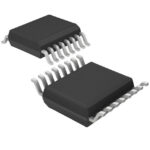 LT1766EGN#TRPBF

The activity of extra discounts on wholesale prices is in full swing…
Please fill in your contact information and we will send you the latest wholesale price list.





