 ChipApex | Global Electronic Components Supplier

SEARCH
Search Product
Search Post
— IC芯片 | 连接器 | 传感器 | 被动器件 —
Search productSearch post
— IC芯片 | 连接器 | 传感器 | 被动器件 —
Consult the customer manager about the wholesale price.
consultation hotline:86-132-6715-2157
email:[email protected]
Contact the product manager for consultation. One-stop consultation is available.
Do you want a lower wholesale price? Please send us your inquiry and we will reply immediately.
The LT1767EMS8#PBF is a monolithic step-down switching regulator manufactured by Analog Devices Inc. It integrates a high-efficiency 1.5A power switch and complete current-mode control circuitry within an 8-pin MSOP package with an exposed pad. The device operates at a fixed switching frequency of 1.25MHz, supporting an input voltage range from 3V to 25V. It provides a fixed output voltage of 1.8V with a maximum output current capability of 1.5A. The component supports Buck and SEPIC topologies and functions reliably across a junction temperature range of -40°C to 125°C.
Verify the specific suffix configuration when ordering, as Analog Devices utilizes alphanumeric codes to denote output voltage options and packaging variations. Confirm that the #PBF designation corresponds to lead-free RoHS compliance standards required for your assembly process. Ensure the selected variant matches the exact fixed output voltage needed for the target application circuit to avoid functional mismatches.
Select this component for designs requiring a fixed 1.8V output from higher input rails up to 25V. The integrated 1.5A switch eliminates the need for external pass transistors, simplifying the bill of materials. Consider the 1.25MHz frequency for balancing component size against electromagnetic interference requirements. Verify thermal performance in the final enclosure given the 125°C maximum junction temperature rating.
This part belongs to the LT1767 family of monolithic step-down switching regulators. The series offers various fixed output voltage options to accommodate different logic levels and system requirements. All variants share the same core architecture, including the 1.25MHz frequency and 1.5A current capability, differing primarily in internal feedback resistor networks and packaging suffixes.
Direct substitutes include other LT1767 variants with different fixed output voltages, such as LT1767EMS8-2.5 or LT1767EMS8-3.3, provided the voltage requirement differs. Cross-family replacements require careful evaluation of pin compatibility and thermal characteristics.
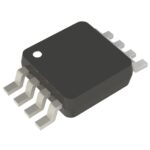 LT1767EMS8#PBF

The activity of extra discounts on wholesale prices is in full swing…
Please fill in your contact information and we will send you the latest wholesale price list.





