 ChipApex | Global Electronic Components Supplier

SEARCH
Search Product
Search Post
— IC芯片 | 连接器 | 传感器 | 被动器件 —
Search productSearch post
— IC芯片 | 连接器 | 传感器 | 被动器件 —
Consult the customer manager about the wholesale price.
consultation hotline:86-132-6715-2157
email:[email protected]
Contact the product manager for consultation. One-stop consultation is available.
Do you want a lower wholesale price? Please send us your inquiry and we will reply immediately.
The LT1931IS5#TRM is a negative Cuk switching regulator IC manufactured by Analog Devices Inc. It operates with an input voltage range of 2.45V to 16V and provides an adjustable negative output from -1.255V to -34V. The device supports a maximum switch current of 1A and features a fixed switching frequency of 1.2MHz. It is housed in a TSOT-23-5 surface-mount package and is rated for an operating temperature range of -40°C to 85°C.
Verify the suffix #TRM indicates tape-and-reel packaging distinct from bulk or cut tape options. Confirm the IS5 grade matches the required industrial temperature range of -40°C to 85°C. Ensure the order quantity aligns with reel specifications if full reels are mandatory for production. Cross-reference the manufacturer part number against distributor databases to confirm current availability status.
Select this component when a compact solution for generating negative voltages is required without using inductive flyback topologies. The Cuk architecture offers lower input and output ripple compared to standard buck-boost converters. Consider the 1.2MHz frequency trade-off between component size and electromagnetic interference. Verify that the load current does not exceed the 1A internal switch limit under all operating conditions.
This part belongs to the LT1931 family of negative Cuk regulators, designed for space-constrained applications. It serves as the industrial temperature variant (IS5) within the series, complementing commercial grades like the ES5. The family allows designers to replace bulky transformer-based solutions with small SOT-23 footprints while maintaining efficient DC-DC conversion capabilities.
LT1931ES5#TRPBF shares identical electrical characteristics but differs in operating temperature range and packaging format.
The Cuk topology provides continuous current at both the input and output terminals, resulting in significantly lower ripple compared to traditional buck-boost converters.
The fixed 1.2MHz frequency allows for the use of smaller inductors and capacitors, reducing the overall PCB footprint compared to lower-frequency regulators.
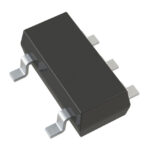 LT1931IS5#TRM

The activity of extra discounts on wholesale prices is in full swing…
Please fill in your contact information and we will send you the latest wholesale price list.





