 ChipApex | Global Electronic Components Supplier

SEARCH
Search Product
Search Post
— IC芯片 | 连接器 | 传感器 | 被动器件 —
Search productSearch post
— IC芯片 | 连接器 | 传感器 | 被动器件 —
Consult the customer manager about the wholesale price.
consultation hotline:86-132-6715-2157
email:[email protected]
Contact the product manager for consultation. One-stop consultation is available.
Do you want a lower wholesale price? Please send us your inquiry and we will reply immediately.
The LT1952IGN#TRPBF is a current mode PWM controller optimized for forward converter topologies using a single primary MOSFET. It features synchronous rectifier control to achieve high efficiency. The device operates with an input voltage range of 18V to 72V and supports an adjustable output voltage. It provides a maximum output current capability of 200mA at the controller output pin, suitable for driving external power stages. The switching frequency is adjustable from 100kHz to 500kHz, and it utilizes a 16-pin SSOP package.
Verify the specific suffix #TRPBF indicates tape and reel packaging when ordering. Confirm that the LT1952IGN#TRPBF is the synchronous version compatible with the LT1950 family. Ensure the application circuit includes appropriate external components for the selected switching frequency and output configuration. Check RoHS compliance status if required by your manufacturing process.
Select this component when a forward converter topology is preferred over flyback for higher power applications. The synchronous rectifier feature makes it suitable for low-voltage, high-current secondary sides. Consider the 100kHz to 500kHz frequency range for balancing size and efficiency. Ensure the external MOSFETs can handle the voltage and current stresses defined by the 18V to 72V input range.
The LT1952 is part of Analog Devices' line of switching regulators designed for robust industrial applications. It serves as a synchronous variant within the LT195x family, offering improved performance compared to non-synchronous counterparts. The device integrates essential control functions into a compact SSOP package, reducing board space requirements while maintaining high reliability standards for critical power systems.
LT1952EGN-1#PBF is a leaded alternative in the same series. LT1950 is the non-synchronous predecessor model. Verify pin compatibility and thermal characteristics when substituting. Ensure the replacement part supports the required synchronous rectification if efficiency is critical.
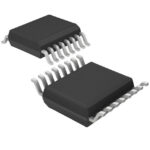 LT1952IGN#TRPBF

The activity of extra discounts on wholesale prices is in full swing…
Please fill in your contact information and we will send you the latest wholesale price list.





