 ChipApex | Global Electronic Components Supplier
SEARCH
Search Product
Search Post
— IC芯片 | 连接器 | 传感器 | 被动器件 —
Search productSearch post
— IC芯片 | 连接器 | 传感器 | 被动器件 —
Consult the customer manager about the wholesale price.
consultation hotline:86-132-6715-2157
email:[email protected]
Contact the product manager for consultation. One-stop consultation is available.
Do you want a lower wholesale price? Please send us your inquiry and we will reply immediately.
The LT3001ES5#TRPBF is a micropower isolated flyback converter from Analog Devices, designed for applications requiring galvanic isolation without optocouplers. It operates with an input voltage range of 2.7 V to 42 V and delivers up to 1.2 A output current at 65 V. The device integrates a primary-side sensing mechanism that samples the isolated output voltage directly from the flyback waveform, eliminating the need for secondary-side feedback components. Key electrical parameters include a switching frequency of 10.6 kHz and a quiescent current of 350 uA. It functions within a temperature range of -40°C to +125°C TJ and is housed in a TSOT-23-5 package.
Verify the specific suffix (#TRPBF) indicates tape-and-reel packaging when ordering. Confirm the manufacturer is Analog Devices Inc., as distributors may list similar part numbers. Check current availability status, as supply constraints may affect lead times. Ensure the operating temperature range meets your environmental requirements before finalizing procurement.
Select this component when primary-side regulation is preferred to reduce bill-of-materials cost and board space. It is suitable for low-power isolated applications where high-frequency switching noise is not critical due to its 10.6 kHz frequency. Consider the 65 V maximum output capability against your load requirements. Verify that the input voltage range covers your system's minimum and maximum supply conditions.
This part belongs to the LT3001 family of micropower isolated flyback converters. It shares the core primary-side sensing technology with other variants in the series but differs in package type and specific electrical ratings. The ES5 designation refers to the TSOT-23-5 package, distinguishing it from larger packages used in higher power versions.
Direct substitutes must support primary-side regulation and similar isolation capabilities. Compare pinouts carefully, as package variations exist within the family. Verify that alternative parts meet the same input voltage and output current specifications. Check if the replacement supports the required switching frequency for your filter design.
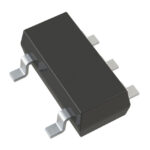 LT3001ES5#TRPBF
The activity of extra discounts on wholesale prices is in full swing…
Please fill in your contact information and we will send you the latest wholesale price list.





