 ChipApex | Global Electronic Components Supplier
SEARCH
Search Product
Search Post
— IC芯片 | 连接器 | 传感器 | 被动器件 —
Search productSearch post
— IC芯片 | 连接器 | 传感器 | 被动器件 —
Consult the customer manager about the wholesale price.
consultation hotline:86-132-6715-2157
email:[email protected]
Contact the product manager for consultation. One-stop consultation is available.
Do you want a lower wholesale price? Please send us your inquiry and we will reply immediately.
The LT3480MPMSE is a monolithic buck switching regulator from Analog Devices Inc., housed in a 10-TFSOP package with an exposed pad. It accepts input voltages ranging from 3.6V to 36V, with a maximum rating of 60V. The device features a high-efficiency 0.25A switch and delivers up to 2A output current. Its adjustable switching frequency spans 200kHz to 2.4MHz, allowing for optimized external component selection. The output voltage is adjustable from 0.79V to 20V. It operates within a junction temperature range of -55°C to 150°C.
Verify the specific suffix (PBF or TRPBF) against your assembly requirements. The PBF variant indicates lead-free tape and reel packaging suitable for surface-mount technology. Confirm that the 10-TFSOP exposed pad footprint matches your PCB layout guidelines. Ensure the supplier provides valid origin documentation to guarantee authenticity, as this is a military-grade component requiring strict supply chain integrity.
Select this component when a wide input voltage range up to 36V is required alongside high efficiency. The adjustable frequency allows designers to minimize inductor size at higher frequencies. Consider the exposed pad thermal requirement for adequate heat dissipation. This part is suitable for applications demanding robust operation across extreme temperatures, provided the 2A output current meets the load requirements.
This part belongs to the LT3480 family of buck regulators designed by Linear Technology, now part of Analog Devices Inc. It serves as a high-performance solution for space-constrained designs requiring wide input ranges. The MP designation typically indicates military-grade qualification, offering enhanced reliability compared to standard commercial variants within the same functional family.
Direct substitutes include other parts from the LT3480 family with compatible pinouts and electrical characteristics. Verify that any replacement maintains the 10-TFSOP package dimensions and thermal pad configuration. Cross-reference the switching frequency range and output current capabilities to ensure system compatibility without redesigning the passive components.
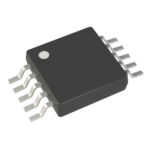 LT3480MPMSE
The activity of extra discounts on wholesale prices is in full swing…
Please fill in your contact information and we will send you the latest wholesale price list.






