 ChipApex | Global Electronic Components Supplier
SEARCH
Search Product
Search Post
— IC芯片 | 连接器 | 传感器 | 被动器件 —
Search productSearch post
— IC芯片 | 连接器 | 传感器 | 被动器件 —
Consult the customer manager about the wholesale price.
consultation hotline:86-132-6715-2157
email:[email protected]
Contact the product manager for consultation. One-stop consultation is available.
Do you want a lower wholesale price? Please send us your inquiry and we will reply immediately.
The LT3495BEDDB-1#TRPBF is a high-efficiency boost DC/DC converter manufactured by Analog Devices Inc. It operates with an input voltage range supporting up to 60V and delivers a regulated output voltage of 40V. The device provides a maximum output current of 200mA while maintaining a low quiescent current of 60µA. It features a fixed switching frequency of 45kHz and includes an output disconnect function for enhanced power management. The component is housed in a compact DFN-10 package, suitable for surface mount applications. It supports an operating temperature range from -40°C to +125°C.
Verify the exact suffix and marking code against the manufacturer's official datasheet to ensure compatibility with design requirements. Confirm availability status through authorized distributors as supply may be limited. Check RoHS compliance documentation for regulatory adherence. Validate thermal performance specifications relative to the intended PCB layout and ambient conditions before finalizing procurement decisions.
Select this component when a boost converter with output disconnect functionality is required. Consider the 45kHz switching frequency for EMI constraints and passive component sizing. Evaluate the 200mA output current limit against peak load demands. Ensure the input voltage range aligns with the source power supply characteristics. Review the thermal resistance of the DFN-10 package for adequate heat dissipation in the target application environment.
This part belongs to the LT3495 family of boost converters designed for efficiency and compactness. It is categorized under switching regulators within Analog Devices' portfolio. The specific suffix indicates tape and reel packaging for automated assembly processes. It complements other power management solutions offering similar voltage regulation capabilities.
Consult Analog Devices official substitution guides for verified alternatives. Cross-reference pinout and electrical parameters with potential replacement parts to ensure functional equivalence without redesigning the surrounding circuitry.
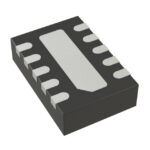 LT3495BEDDB-1#TRPBF
The activity of extra discounts on wholesale prices is in full swing…
Please fill in your contact information and we will send you the latest wholesale price list.





