 ChipApex | Global Electronic Components Supplier
SEARCH
Search Product
Search Post
— IC芯片 | 连接器 | 传感器 | 被动器件 —
Search productSearch post
— IC芯片 | 连接器 | 传感器 | 被动器件 —
Consult the customer manager about the wholesale price.
consultation hotline:86-132-6715-2157
email:[email protected]
Contact the product manager for consultation. One-stop consultation is available.
Do you want a lower wholesale price? Please send us your inquiry and we will reply immediately.
The LT3495EDDB#TRMPBF is a synchronous boost DC/DC converter manufactured by Analog Devices Inc. It integrates a high-efficiency power switch and operates with an input voltage range of 2.7V to 16V, delivering up to 650mA of output current. The device utilizes a fixed 1.2MHz switching frequency to minimize external component size. Key features include an output disconnect function for battery preservation, internal soft-start limiting inrush current, and comprehensive protection against over-current and thermal overload. It is housed in an 8-lead DFN package.
Verify the specific suffix and tape-and-reel packaging configuration against official Analog Devices documentation prior to ordering. Confirm that the requested quantity aligns with standard manufacturing reel sizes. Ensure compatibility with surface-mount assembly processes suitable for the DFN package type. Cross-reference the manufacturer part number with authorized distributor catalogs to validate authenticity and traceability.
Select this component for applications requiring a compact solution for boosting low input voltages to higher levels. The fixed 1.2MHz frequency allows for the use of small inductors and capacitors, reducing overall board space. Consider the output disconnect capability if maintaining battery life during storage or shutdown is critical. Evaluate the thermal performance requirements relative to the expected load current and ambient temperature conditions.
This part belongs to the LT349x family of synchronous boost converters from Analog Devices. These components are designed for high efficiency and small footprint in portable electronics. The series typically offers integrated switches and control logic to simplify design implementation while maintaining reliable performance across varying input voltage ranges.
Consult official Analog Devices substitution guides for verified alternatives. Ensure any replacement maintains compatible input voltage ranges, output current capabilities, and package dimensions. Verify that functional equivalents support similar switching frequencies and protection features.
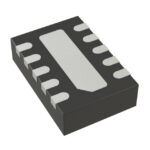 LT3495EDDB#TRMPBF
The activity of extra discounts on wholesale prices is in full swing…
Please fill in your contact information and we will send you the latest wholesale price list.





