 ChipApex | Global Electronic Components Supplier
SEARCH
Search Product
Search Post
— IC芯片 | 连接器 | 传感器 | 被动器件 —
Search productSearch post
— IC芯片 | 连接器 | 传感器 | 被动器件 —
Consult the customer manager about the wholesale price.
consultation hotline:86-132-6715-2157
email:[email protected]
Contact the product manager for consultation. One-stop consultation is available.
Do you want a lower wholesale price? Please send us your inquiry and we will reply immediately.
The LT3587EUD#TRPBF is a monolithic high-voltage inverter and dual boost DC/DC converter manufactured by Analog Devices Inc. It integrates three independent switching regulators within a single package to generate positive, negative, and inverted output rails from a single input source. The device features a 1 MHz fixed switching frequency and supports an input voltage range up to 6 V. Key electrical specifications include a quiescent current of 2.4 mA, a maximum operating temperature of +125°C, and a minimum operating temperature of -40°C. The switch current capability is typically 990 mA.
Verify the exact part number suffix against official Analog Devices documentation to ensure correct packaging and tape-and-reel specifications. Confirm that the requested quantity matches the manufacturer's standard reel size. Cross-reference the date code and lot information with the supplier's declaration to guarantee authenticity. Ensure storage conditions comply with moisture sensitivity level requirements prior to assembly.
Select this component when a compact solution is required to generate multiple voltage rails from a single low-voltage input source. The integrated design reduces board space compared to discrete regulator solutions. Consider the 1 MHz switching frequency for applications where electromagnetic interference management and component size are critical constraints. Verify that the load requirements for each rail fall within the specified switch current limits.
This component belongs to the LT3587 family of high-voltage monolithic inverters and dual boost converters. It is designed to simplify power supply design in space-constrained applications. The EUD package designation indicates a specific lead-free QFN footprint suitable for surface-mount assembly. The #TRPBF suffix denotes the tape-and-reel packaging format with lead-free finish.
Direct replacements may include other Analog Devices dual boost/inverter converters such as the LT3586 or LT3585 series, depending on pin compatibility and electrical requirements. Verify that substitute parts match the input voltage range, switching frequency, and output configuration. Consult official cross-reference guides for functional equivalence.
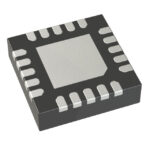 LT3587EUD#TRPBF
The activity of extra discounts on wholesale prices is in full swing…
Please fill in your contact information and we will send you the latest wholesale price list.





