 ChipApex | Global Electronic Components Supplier
SEARCH
Search Product
Search Post
— IC芯片 | 连接器 | 传感器 | 被动器件 —
Search productSearch post
— IC芯片 | 连接器 | 传感器 | 被动器件 —
Consult the customer manager about the wholesale price.
consultation hotline:86-132-6715-2157
email:[email protected]
Contact the product manager for consultation. One-stop consultation is available.
Do you want a lower wholesale price? Please send us your inquiry and we will reply immediately.
The LT3641IFE#TRPBF is a monolithic switching regulator IC designed for high-efficiency LED driving applications. It integrates a 2A switch and operates from input voltages up to 60V. The device supports constant current regulation with programmable output current via an external resistor. It features adjustable frequency operation, soft-start capability, and comprehensive protection including over-voltage, thermal shutdown, and reverse battery protection. The component is housed in a thermally enhanced 28-lead TSSOP package.
Verify the specific suffix TRPBF indicates tape-and-reel packaging when reviewing distributor listings. Confirm the lead-free status aligns with RoHS compliance requirements for your assembly process. Cross-reference the manufacturer's latest datasheet revision to ensure pinout and electrical characteristics have not changed. Validate that the thermal pad connection matches your PCB layout design guidelines.
Evaluate the maximum input voltage against your supply rail to ensure headroom. Check if the integrated 2A switch current limit meets the peak demand of your LED string. Consider the need for external compensation components based on the desired loop stability. Assess thermal management requirements given the power dissipation in the TSSOP package under load conditions.
This component belongs to Analog Devices' linear technology portfolio focused on power management solutions. It is part of a family of buck regulators optimized for LED applications. The device complements other LT364x series parts offering different current ratings or package options. It serves as a core driver element in modern solid-state lighting designs requiring compact form factors.
Direct substitutes include other LT3641 variants with different package styles such as the LT3641IMSE#PBF. Cross-check pin compatibility before replacing with generic equivalents. Verify that alternative devices support the same 60V input rating and 2A switch current. Ensure thermal performance metrics match the original design constraints.
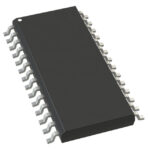 LT3641IFE#TRPBF
The activity of extra discounts on wholesale prices is in full swing…
Please fill in your contact information and we will send you the latest wholesale price list.





