 ChipApex | Global Electronic Components Supplier
SEARCH
Search Product
Search Post
— IC芯片 | 连接器 | 传感器 | 被动器件 —
Search productSearch post
— IC芯片 | 连接器 | 传感器 | 被动器件 —
Consult the customer manager about the wholesale price.
consultation hotline:86-132-6715-2157
email:[email protected]
Contact the product manager for consultation. One-stop consultation is available.
Do you want a lower wholesale price? Please send us your inquiry and we will reply immediately.
The LT3694IFE-1#PBF is a monolithic switching regulator featuring one buck converter and two low-dropout (LDO) regulators. It operates from an input voltage range of 4 V to 36 V with a quiescent current of 1 mA. The buck output provides up to 2.6 A at voltages between 750 mV and 16 V, while the LDOs offer additional regulated outputs. Switching frequency is adjustable from 250 kHz to 2.5 MHz. The device is housed in a TSSOP-EP-20 package and supports operation temperatures from -40°C to +125°C.
Verify component authenticity through authorized Analog Devices distributors or certified partners. Confirm RoHS compliance status and check for specific manufacturing lot codes if required by quality standards. Ensure storage conditions meet moisture sensitivity level requirements prior to soldering. Review latest datasheet revisions for any updates to electrical characteristics or recommended circuit configurations before finalizing procurement orders.
Select this component when a compact solution combining switching and linear regulation is needed. The integrated topology reduces external component count compared to discrete designs. Evaluate thermal performance based on expected load currents and ambient temperatures. Consider the adjustable frequency range to minimize electromagnetic interference in sensitive environments. Verify that the TSSOP-EP-20 package fits the available PCB footprint constraints.
This part belongs to the LT3694 family of mixed-signal power management ICs designed for space-constrained applications. It combines the efficiency of a synchronous buck converter with the low noise of LDOs. The series targets industrial and automotive markets where reliability and wide operating temperature ranges are critical. Similar parts may vary in output current capabilities or package types.
LT3694EUFD#PBF and LT3694IUFD#PBF are parameter-equivalent alternatives within the same product family. These variants share identical functional specifications but differ in package type and temperature grade. Verify pin compatibility and thermal dissipation requirements when substituting.
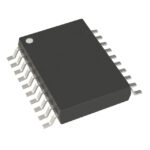 LT3694IFE-1#PBF
The activity of extra discounts on wholesale prices is in full swing…
Please fill in your contact information and we will send you the latest wholesale price list.





