 ChipApex | Global Electronic Components Supplier
SEARCH
Search Product
Search Post
— IC芯片 | 连接器 | 传感器 | 被动器件 —
Search productSearch post
— IC芯片 | 连接器 | 传感器 | 被动器件 —
Consult the customer manager about the wholesale price.
consultation hotline:86-132-6715-2157
email:[email protected]
Contact the product manager for consultation. One-stop consultation is available.
Do you want a lower wholesale price? Please send us your inquiry and we will reply immediately.
The LT3695EMSE-3.3#TRPBF is a micropower step-down switching regulator manufactured by Analog Devices Inc., housed in a 16-lead MSOP package with exposed pad. This buck topology device delivers a fixed 3.3V output at up to 1A current capability. It operates within an input voltage range of 3.6V to 36V and features a low quiescent current of 35µA. The adjustable switching frequency spans from 250kHz to 2.2MHz, allowing for optimization of external component size versus efficiency. The unit supports operation across an extended temperature range from -40°C to +125°C.
Verify the specific suffix #TRPBF confirms tape-and-reel packaging rather than tube configuration when sourcing. Confirm the -3.3 designation matches the required fixed output voltage for the target circuit design. Check manufacturer documentation for RoHS compliance status and lead-free soldering recommendations. Ensure the MSOP-16 footprint matches the PCB layout constraints before finalizing procurement orders.
Select this component when a compact solution is needed for high-voltage input conversion down to standard logic levels. The fixed 3.3V output simplifies design compared to adjustable variants. Consider the 1A limit for load requirements; higher currents may require parallel solutions or different family members. The wide input range accommodates various battery chemistries and automotive bus voltages directly.
This part belongs to the LT3695 series of micropower buck regulators from Analog Devices. It shares architectural similarities with other parts in the family but differs in output configuration and packaging. The EMSE variant denotes the specific MSOP-16 package type, while the TRPBF suffix indicates the reel-based shipping format intended for automated surface-mount assembly processes.
LT3695EMSE-5#PBF offers identical functionality with a 5V fixed output instead of 3.3V. LT3695IMSE-3.3#TRPBF provides the same electrical specifications in an SOIC-16 package rather than MSOP-16. Verify pinout compatibility and thermal performance differences when substituting between package types.
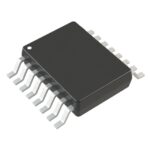 LT3695EMSE-3.3#TRPBF
The activity of extra discounts on wholesale prices is in full swing…
Please fill in your contact information and we will send you the latest wholesale price list.





