 ChipApex | Global Electronic Components Supplier

SEARCH
Search Product
Search Post
— IC芯片 | 连接器 | 传感器 | 被动器件 —
Search productSearch post
— IC芯片 | 连接器 | 传感器 | 被动器件 —
Consult the customer manager about the wholesale price.
consultation hotline:86-132-6715-2157
email:[email protected]
Contact the product manager for consultation. One-stop consultation is available.
Do you want a lower wholesale price? Please send us your inquiry and we will reply immediately.
The LT3758AIMSE#TRPBF is a high input voltage DC/DC controller from Analog Devices, designed for versatile power conversion topologies including boost, flyback, SEPIC, and inverting configurations. It operates within an input voltage range of 5.5V to 100V and supports switching frequencies between 100kHz and 1MHz. The device features current mode control with an internal 7.2V regulator, enabling positive or negative isolated outputs. Packaged in a 10-MSOP-EP surface-mount format, it functions across a temperature range of -40°C to +125°C.
Verify the specific suffix #TRPBF confirms tape and reel packaging when ordering. Confirm the AIMSE designation matches the required industrial temperature grade (-40°C to +125°C) against datasheet specifications. Ensure compatibility with the 10-MSOP-EP footprint during PCB layout. Cross-reference the manufacturer part number directly with Analog Devices documentation to avoid counterfeit components.
Select this component for applications demanding high input voltages up to 100V without external bias supplies. Consider the current mode control for improved transient response compared to voltage mode alternatives. Evaluate the thermal performance of the exposed pad package for heat dissipation requirements. Verify that the 100kHz to 1MHz frequency range aligns with the desired passive component size constraints.
This controller belongs to the LT3758 family, which specializes in high-voltage power management solutions. The series allows designers to implement complex power stages using minimal external components. The AIMSE variant specifically denotes the industrial temperature rating and MSOP package configuration, distinguishing it from military or extended temperature options.
LT3758IMSE#TRPBF: Industrial grade alternative with identical electrical characteristics and pinout.
No, the LT3758 does not include integrated synchronous rectifier drivers; it requires external MOSFETs for all switching and rectification functions.
The internal 7.2V regulator is powered directly from the high input voltage rail, eliminating the need for an auxiliary bias winding or startup circuit.
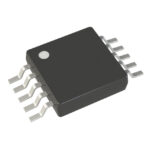 LT3758AIMSE#TRPBF

The activity of extra discounts on wholesale prices is in full swing…
Please fill in your contact information and we will send you the latest wholesale price list.





