 ChipApex | Global Electronic Components Supplier

SEARCH
Search Product
Search Post
— IC芯片 | 连接器 | 传感器 | 被动器件 —
Search productSearch post
— IC芯片 | 连接器 | 传感器 | 被动器件 —
Consult the customer manager about the wholesale price.
consultation hotline:86-132-6715-2157
email:[email protected]
Contact the product manager for consultation. One-stop consultation is available.
Do you want a lower wholesale price? Please send us your inquiry and we will reply immediately.
The LT3758MPMSE is a high-voltage DC-DC switching controller manufactured by Analog Devices Inc., designed for versatile power conversion topologies including boost, flyback, SEPIC, and inverting configurations. It operates with a supply voltage range of 5.5V to 100V and supports switching frequencies from 100kHz to 1MHz. The device features current-mode control, programmable soft start, and clock synchronization capabilities. Packaged in a 10-MSOP-EP surface-mount format, it supports positive or negative isolated outputs and functions within a junction temperature range of -55°C to 150°C.
Verify the specific suffix (e.g., #TRPBF, #PBF) against the required packaging configuration, as these denote tape-and-reel versus tube quantities. Confirm that the 10-MSOP-EP package with exposed pad matches the PCB thermal design requirements. Ensure the operating temperature range aligns with the final application environment specifications before procurement.
Select this component when designing converters requiring inputs up to 100V without external level shifting. Consider the 10-MSOP-EP package for applications needing efficient thermal dissipation through the exposed pad. Evaluate the need for clock synchronization if operating in noisy environments or alongside other switching regulators. Verify that the current-mode control strategy fits the magnetic component selection for the intended topology.
The LT3758MPMSE belongs to the LT3758 family of high-voltage switching controllers. It shares core architectural features with variants differing primarily in packaging or reel specifications. This model specifically utilizes the 10-MSOP-EP form factor, distinguishing it from standard MSOP packages by providing an exposed thermal pad for enhanced heat transfer to the printed circuit board.
Direct replacements must match the 100V input capability and 10-MSOP-EP footprint. Verify pinout compatibility for boost, flyback, SEPIC, and inverting modes. Check if alternative controllers support the same 100kHz to 1MHz frequency range and current-mode control architecture to ensure seamless integration into existing designs.
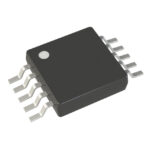 LT3758MPMSE

The activity of extra discounts on wholesale prices is in full swing…
Please fill in your contact information and we will send you the latest wholesale price list.





