 ChipApex | Global Electronic Components Supplier

SEARCH
Search Product
Search Post
— IC芯片 | 连接器 | 传感器 | 被动器件 —
Search productSearch post
— IC芯片 | 连接器 | 传感器 | 被动器件 —
Consult the customer manager about the wholesale price.
consultation hotline:86-132-6715-2157
email:[email protected]
Contact the product manager for consultation. One-stop consultation is available.
Do you want a lower wholesale price? Please send us your inquiry and we will reply immediately.
The LT3791EFE-1 is a synchronous 4-switch buck-boost DC/DC controller designed for high-voltage LED driver applications. It supports an input voltage range of 4.7V to 60V and delivers up to 10A output current with a maximum output voltage of 60V. The device operates at a switching frequency between 200kHz and 700kHz, achieving efficiencies up to 98.5%. It features analog and PWM dimming capabilities and includes clock synchronization. The controller operates within a junction temperature range of -40°C to +125°C.
Verify the specific suffix '-1' indicates the variant with 10A output current capability, distinct from the standard LT3791. Confirm the package is 38-TSSOP-EP. Check for RoHS compliance documentation. Ensure the supplier provides valid Analog Devices Inc. origin traces. Validate that the part number matches the exact electrical specifications required for your 60V max application design.
Select this component when the application requires a single-inductor topology handling wide input-to-output voltage ratios without discontinuous conduction. It is suitable for designs needing high efficiency across varying load conditions. Consider the 38-pin TSSOP thermal performance for power dissipation limits. Verify that the external component selection supports the 200kHz to 700kHz frequency range for optimal size and efficiency balance.
This part belongs to the LT3791 family of LED driver controllers from Analog Devices. It is specifically the '-1' variant, which distinguishes itself by supporting higher output currents up to 10A compared to other variants in the series. It shares the core 4-switch buck-boost architecture but is optimized for higher power density applications requiring robust current handling capabilities within the same 60V voltage envelope.
LT3791EFE#PBF is a related variant in the same family but typically specifies lower output current limits (e.g., 2A). Direct substitution requires verifying if the 10A capability of the LT3791EFE-1 is necessary for the specific circuit design. If the application only requires lower current, the standard LT3791 may suffice, but pinout and functionality remain largely consistent within the synchronous buck-boost controller category.
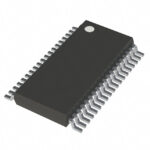 LT3791EFE-1

The activity of extra discounts on wholesale prices is in full swing…
Please fill in your contact information and we will send you the latest wholesale price list.





