 ChipApex | Global Electronic Components Supplier
SEARCH
Search Product
Search Post
— IC芯片 | 连接器 | 传感器 | 被动器件 —
Search productSearch post
— IC芯片 | 连接器 | 传感器 | 被动器件 —
Consult the customer manager about the wholesale price.
consultation hotline:86-132-6715-2157
email:[email protected]
Contact the product manager for consultation. One-stop consultation is available.
Do you want a lower wholesale price? Please send us your inquiry and we will reply immediately.
The LT3971IDD-3.3#PBF is a synchronous step-down switching regulator manufactured by Analog Devices Inc., housed in a 10-pin DFN package. It delivers a fixed 3.3V output at up to 1.2A with an input voltage range of 4.3V to 38V. The device operates at a 2MHz switching frequency and features ultra-low quiescent current of 2.8µA during active regulation and 1.7µA during shutdown. It supports adjustable frequency operation from 200kHz to 2.2MHz, functions within a -40°C to +125°C temperature range, and includes integrated protection features.
Verify component authenticity through authorized distribution channels due to limited availability status. Confirm RoHS compliance documentation matches the specific manufacturing lot. Ensure storage conditions adhere to moisture sensitivity level requirements prior to soldering. Validate that the DFN-10 footprint aligns with PCB design specifications to prevent thermal or mechanical mismatch issues during assembly.
Select this model when a fixed 3.3V rail is required with high efficiency across a broad input range. The 1.2A capacity suits moderate load applications without external passives. Consider the 10-pin DFN package for space-constrained designs. Evaluate the 2MHz default frequency against EMI constraints; lower frequencies may be achieved via synchronization pin usage. Compare against LT3970 if lower current or different topology is needed.
This component belongs to the LT3971 family of micropower synchronous buck regulators designed for high-efficiency power management. It shares architectural similarities with the LT3970 but offers higher output current capability. The IDD suffix denotes the specific DFN-10 package variant, while the #PBF indicates lead-free tin finish packaging compliant with environmental standards.
The device integrates a reverse current protection feature that prevents inductor discharge back into the input source when the load is removed or during light-load conditions, maintaining system stability.
The SYNC pin allows the internal oscillator to be synchronized to an external clock signal, enabling phase shifting or noise reduction by aligning multiple converters to a common frequency reference.
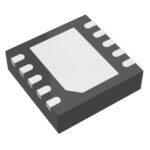 LT3971IDD-3.3#PBF
The activity of extra discounts on wholesale prices is in full swing…
Please fill in your contact information and we will send you the latest wholesale price list.







