 ChipApex | Global Electronic Components Supplier
SEARCH
Search Product
Search Post
— IC芯片 | 连接器 | 传感器 | 被动器件 —
Search productSearch post
— IC芯片 | 连接器 | 传感器 | 被动器件 —
Consult the customer manager about the wholesale price.
consultation hotline:86-132-6715-2157
email:[email protected]
Contact the product manager for consultation. One-stop consultation is available.
Do you want a lower wholesale price? Please send us your inquiry and we will reply immediately.
The LT3971IDD#TRPBF is a synchronous step-down switching regulator manufactured by Analog Devices Inc. It features an adjustable frequency range from 200kHz to 2MHz and accepts input voltages between 4.3V and 38V. The device delivers up to 1.2A of output current in a compact 10-lead DFN package with an exposed pad. It incorporates Burst Mode operation for high efficiency at light loads, maintaining low output ripple. Key electrical characteristics include a quiescent current of 2.8µA during regulation and 1.7µA during shutdown. The component operates within a temperature range of -40°C to +125°C.
Verify the specific suffix #TRPBF indicates tape-and-reel packaging when sourcing components. Confirm that the manufacturer designation matches Analog Devices Inc. or Linear Technology. Ensure the part number corresponds to the DFN-10 package variant. Cross-reference the datasheet revision to confirm compatibility with design requirements. Validate RoHS compliance status through official documentation before integration.
Select this regulator for applications requiring wide input voltage ranges and high efficiency across varying load conditions. The adjustable frequency allows optimization for external component size versus noise performance. Consider the thermal capabilities of the exposed pad DFN package for heat dissipation needs. Evaluate the need for Burst Mode operation to minimize standby power consumption in battery-driven designs.
This component belongs to the LT3971 family of high-voltage synchronous buck regulators. It shares architectural similarities with other members like the LT3971EDD and LT3971IMSE, differing primarily in package type and shipping configuration. The series is designed for robust performance in demanding environments, offering reliable voltage regulation with minimal external component count.
Compatible alternatives include LT3971IDD#PBF for tube packaging or LT3971EMSE variants for MSOP packages. Verify pinout compatibility and thermal resistance differences when substituting packages. Ensure the replacement maintains the same input voltage range and output current capabilities.
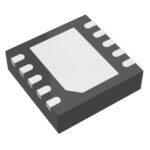 LT3971IDD#TRPBF
The activity of extra discounts on wholesale prices is in full swing…
Please fill in your contact information and we will send you the latest wholesale price list.





