 ChipApex | Global Electronic Components Supplier
SEARCH
Search Product
Search Post
— IC芯片 | 连接器 | 传感器 | 被动器件 —
Search productSearch post
— IC芯片 | 连接器 | 传感器 | 被动器件 —
Consult the customer manager about the wholesale price.
consultation hotline:86-132-6715-2157
email:[email protected]
Contact the product manager for consultation. One-stop consultation is available.
Do you want a lower wholesale price? Please send us your inquiry and we will reply immediately.
The LT3975HMSE#PBF is a high-efficiency, adjustable-frequency monolithic buck switching regulator manufactured by Analog Devices Inc. It operates with an input voltage range of 4.2V to 42V and delivers up to 2.5A of load current. The device features a low quiescent current of 2.7µA in Burst Mode operation, ensuring high efficiency at light loads while maintaining output ripple below 15mV. It includes integrated Schottky diodes, current limit foldback for short-circuit protection, and maintains a low dropout voltage of 500mV during input transients such as automotive cold crank events.
Verify the specific suffix 'HMSE' indicates the military/high-temperature grade variant when ordering. Confirm package type matches MSOP-10 requirements for your PCB layout. Ensure compatibility with LTspice simulation models if circuit design relies on manufacturer-provided tools. Check for RoHS compliance documentation if environmental regulations apply to your deployment.
Select this component when a wide input voltage range up to 42V is required alongside high peak current capability. It is suitable for applications demanding minimal output ripple without external filtering complexity. Consider the MSOP-10 package constraints regarding thermal dissipation and pin pitch. Evaluate the need for adjustable frequency settings against fixed-frequency alternatives for noise-sensitive environments.
This part belongs to the LT397x family of step-down regulators designed for high-efficiency power management. It shares architectural similarities with the LT3973 and LT3975 variants but offers specific current and thermal characteristics tailored for demanding industrial and automotive loads. The device integrates control logic and power switches into a single compact solution.
The device supports a continuous input voltage range up to 42V.
It employs current limit foldback to reduce the output current and limit power dissipation during a short circuit.
No, the device integrates internal synchronous rectification diodes, eliminating the need for an external catch diode.
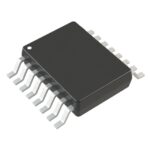 LT3975HMSE#PBF
The activity of extra discounts on wholesale prices is in full swing…
Please fill in your contact information and we will send you the latest wholesale price list.





