 ChipApex | Global Electronic Components Supplier
SEARCH
Search Product
Search Post
— IC芯片 | 连接器 | 传感器 | 被动器件 —
Search productSearch post
— IC芯片 | 连接器 | 传感器 | 被动器件 —
Consult the customer manager about the wholesale price.
consultation hotline:86-132-6715-2157
email:[email protected]
Contact the product manager for consultation. One-stop consultation is available.
Do you want a lower wholesale price? Please send us your inquiry and we will reply immediately.
The LT3999MPMSE#PBF is a monolithic push-pull DC/DC driver manufactured by Analog Devices Inc. It operates with an input voltage range from 2.7V to 36V and provides a single adjustable output capable of driving up to 1A. The device utilizes a push-pull topology suitable for isolated power supplies, featuring duty cycle control for ΔVin compensation. It is housed in a thermally enhanced 10-lead MSOP package with an exposed pad (MSOP-EP). The component supports switching frequencies between 50kHz and 1MHz and functions within a junction temperature range of -40°C to 150°C.
Verify the specific suffix 'MPMSE' against official Analog Devices documentation to confirm exact thermal grade and pinout compatibility. Ensure the design accounts for the exposed pad thermal requirements specified in the datasheet. Confirm RoHS compliance status through the manufacturer's material declaration. Cross-reference the part number with authorized distributors to validate authenticity and supply chain integrity before procurement.
Select this component when an isolated, low-noise push-pull driver is required for sensitive analog applications. The adjustable frequency allows optimization for transformer size versus efficiency. The wide input range and duty cycle compensation simplify designs handling varying source voltages. Consider the 1A current limit and thermal performance in the MSOP package when determining heat dissipation needs for the target application environment.
The LT3999 belongs to a family of high-performance DC/DC drivers designed for noise-sensitive systems. Unlike standard buck or boost regulators, it drives external transformers to create isolated outputs. The MP variant typically denotes a specific military or extended temperature grade within the Analog Devices portfolio, distinguished by rigorous qualification standards compared to commercial counterparts.
Direct replacements include other LT3999 variants such as LT3999HMSE#PBF or LT3999EDD#TRPBF, provided the package type (MSOP vs DFN) and temperature rating match the design constraints. Verify that substitute parts maintain the same push-pull topology and current drive capabilities.
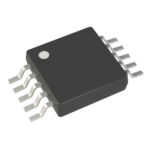 LT3999MPMSE#PBF
The activity of extra discounts on wholesale prices is in full swing…
Please fill in your contact information and we will send you the latest wholesale price list.





