 ChipApex | Global Electronic Components Supplier
SEARCH
Search Product
Search Post
— IC芯片 | 连接器 | 传感器 | 被动器件 —
Search productSearch post
— IC芯片 | 连接器 | 传感器 | 被动器件 —
Consult the customer manager about the wholesale price.
consultation hotline:86-132-6715-2157
email:[email protected]
Contact the product manager for consultation. One-stop consultation is available.
Do you want a lower wholesale price? Please send us your inquiry and we will reply immediately.
The LT6402CUD-20#TRPBF is a low distortion, low noise differential amplifier and ADC driver designed for applications from DC to 300MHz. It features a fixed gain of 20dB (10V/V) and operates on a single 5V supply with typical current consumption of 30mA. The device includes both unfiltered outputs (+OUT, –OUT) and built-in filtered outputs (+OUTFILTERED, –OUTFILTERED) with a 75MHz -3dB bandwidth. Key electrical specifications include an input-referred noise voltage density of 1.9nV/√Hz at 20MHz, a noise figure of 12.4dB, and an output third-order intercept point (OIP3) of 51dBm at 20MHz. It is housed in a compact 16-lead 3mm × 3mm QFN package.
Verify the suffix #TRPBF indicates lead-free tape and reel packaging. Confirm the 'C' grade designation meets the required operating temperature range, as it is guaranteed for 0°C to 70°C performance but designed for -40°C to 85°C. Ensure the 16-lead QFN package footprint matches the PCB layout. Check that the specific lot date code aligns with project timelines. Validate that the source document confirms the part marking LCBC for this specific ordering option.
Select this component when a fixed 20dB gain is required alongside integrated filtering to reduce external component count. The built-in 75MHz filter simplifies anti-aliasing design for ADC inputs. Choose the C-grade variant if the application environment remains within 0°C to 70°C; otherwise, consider the I-grade for full -40°C to 85°C specification guarantees. Ensure the 5V supply constraint fits the system power budget. Verify that the 30mA quiescent current is acceptable for thermal management in the chosen QFN package.
The LT6402-20 belongs to Analog Devices' family of low-noise differential amplifiers optimized for direct ADC interfacing. Unlike general-purpose op-amps, this device integrates specific feedback networks and output stages tailored for high-speed signal conditioning. The -20 suffix denotes the fixed 20dB gain configuration, distinguishing it from other gain variants in the series. It serves as a bridge between analog front-end sensors and digital conversion stages in high-frequency communication and instrumentation systems.
Publicly confirmed substitute part numbers are not provided in the datasheet. Designers should verify pin compatibility and electrical parameter overlaps before considering alternative differential amplifiers. Cross-reference the 16-lead QFN package dimensions and thermal characteristics with potential replacements to ensure mechanical fit.
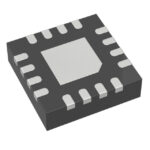 LT6402CUD-20#TRPBF
The activity of extra discounts on wholesale prices is in full swing…
Please fill in your contact information and we will send you the latest wholesale price list.





