 ChipApex | Global Electronic Components Supplier

SEARCH
Search Product
Search Post
— IC芯片 | 连接器 | 传感器 | 被动器件 —
Search productSearch post
— IC芯片 | 连接器 | 传感器 | 被动器件 —
Consult the customer manager about the wholesale price.
consultation hotline:86-132-6715-2157
email:[email protected]
Contact the product manager for consultation. One-stop consultation is available.
Do you want a lower wholesale price? Please send us your inquiry and we will reply immediately.
The LT8292AFE#WPBF is a synchronous four-switch buck-boost controller from Analog Devices Inc., designed for high-efficiency power management in automotive and industrial applications. It supports input voltages ranging from 5.5V to 60V, enabling operation with inputs above, below, or equal to the output voltage. The device features a proprietary peak current mode architecture with adjustable switching frequencies between 100kHz and 650kHz, alongside spread spectrum frequency modulation for EMI reduction. It offers ±2% output voltage accuracy and ±5% average current regulation precision. Packaged in a thermally enhanced 38-lead TSSOP with an exposed pad, it is AEC-Q100 qualified for automotive use.
Verify that the specific suffix #WPBF corresponds to the tube packaging format required for your assembly process, as other variants like #WTRPBF utilize tape and reel. Confirm AEC-Q100 qualification status if deploying in automotive environments. Ensure thermal design accounts for the 38-lead TSSOP package's thermal performance characteristics under maximum load conditions specified in the datasheet.
Select this component when designing systems requiring a single-stage solution for bidirectional voltage conversion without external inductors or complex topologies. Consider its suitability for applications demanding low EMI through spread spectrum modulation and high precision current sharing. Evaluate the trade-off between the fixed frequency range limits and the benefits of integrated protection features against the need for external synchronization sources.
This part belongs to the LT8292 family of synchronous buck-boost controllers, representing Analog Devices' focus on integrated power management solutions for challenging voltage environments. The AFE variant specifically denotes automotive-grade qualification, ensuring reliability under harsh operating conditions compared to commercial grade counterparts within the same functional family.
LT8292AFEPBF serves as a direct equivalent alternative, differing primarily in packaging configuration rather than electrical functionality. Verify pinout compatibility and thermal requirements when substituting, as package variations can impact board layout and heat dissipation strategies despite identical internal circuitry.
The device includes fault protection mechanisms that detect output shorts. During such events, it enters a low duty cycle automatic retry mode to attempt recovery while limiting stress on the components.
Split gate drivers allow for independent optimization of the high-side and low-side MOSFET switching characteristics. This feature enables designers to adjust turn-on/turn-off speeds to balance efficiency and electromagnetic interference (EMI) performance.
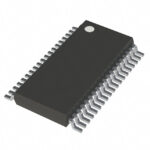 LT8292AFE#WPBF

The activity of extra discounts on wholesale prices is in full swing…
Please fill in your contact information and we will send you the latest wholesale price list.





