 ChipApex | Global Electronic Components Supplier
SEARCH
Search Product
Search Post
— IC芯片 | 连接器 | 传感器 | 被动器件 —
Search productSearch post
— IC芯片 | 连接器 | 传感器 | 被动器件 —
Consult the customer manager about the wholesale price.
consultation hotline:86-132-6715-2157
email:[email protected]
Contact the product manager for consultation. One-stop consultation is available.
Do you want a lower wholesale price? Please send us your inquiry and we will reply immediately.
The LT8364HDE#TRPBF is a current mode DC/DC converter featuring an integrated 60V, 4A switch. It operates from an input voltage range of 2.8V to 60V and supports boost, SEPIC, or inverting topologies via a single feedback pin architecture. The device utilizes Burst Mode operation to achieve a quiescent current as low as 9µA while maintaining typical output ripple below 15mV. It includes an external compensation pin for loop bandwidth optimization across programmable switching frequencies between 300kHz and 2MHz. The component is housed in a 12-lead DFN package with exposed pad.
Verify the specific suffix #TRPBF indicates tape and reel packaging when ordering. Confirm the H-grade designation matches the required junction temperature rating of up to 150°C for your thermal design. Ensure the 12-WFDFN package dimensions align with your PCB footprint requirements. Cross-reference the datasheet revision date to confirm feature availability before finalizing procurement specifications.
Select this component when designing circuits that require handling input voltages up to 60V with a single switch. The external compensation feature is critical if your application demands precise loop stability across varying load conditions. Consider the Burst Mode capability if minimizing no-load power consumption is a priority. Verify that the 4A switch current limit meets your peak load requirements without exceeding thermal constraints in the DFN package.
This part belongs to the LT8364 family of low IQ boost/SEPIC/inverting converters manufactured by Analog Devices. It shares architectural similarities with other high-voltage DC/DC converters but is distinguished by its specific 60V rating and single-feedback pin design. The family targets applications requiring efficient power conversion from wide-range input sources.
Direct replacements must support 60V input, 4A switch current, and similar topology flexibility. Verify pinout compatibility for the 12-DFN package. Check if alternative devices offer comparable quiescent current levels and external compensation capabilities to ensure circuit stability without redesign.
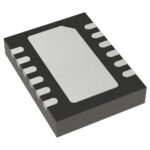 LT8364HDE#TRPBF
The activity of extra discounts on wholesale prices is in full swing…
Please fill in your contact information and we will send you the latest wholesale price list.





