 ChipApex | Global Electronic Components Supplier

SEARCH
Search Product
Search Post
— IC芯片 | 连接器 | 传感器 | 被动器件 —
Search productSearch post
— IC芯片 | 连接器 | 传感器 | 被动器件 —
Consult the customer manager about the wholesale price.
consultation hotline:86-132-6715-2157
email:[email protected]
Contact the product manager for consultation. One-stop consultation is available.
Do you want a lower wholesale price? Please send us your inquiry and we will reply immediately.
The LT8390AEFE#PBF is a synchronous 4-switch buck-boost DC/DC controller manufactured by Analog Devices Inc. It supports input voltages from 4V to 60V and regulates output voltage, input current, or output current when the input is above, below, or equal to the output. The device features a fixed switching frequency range of 600kHz to 2MHz with spread spectrum capability. It operates within an extended temperature range of -40°C to +125°C and includes shutdown functionality. The controller utilizes a proprietary peak buck/peak boost current mode control scheme for efficient power management in various topologies.
Verify the complete part number including suffixes such as #PBF for lead-free compliance and package type. Confirm that the specific grade (A) matches the required performance specifications for your application environment. Check official Analog Devices documentation for the latest revision status and any product change notices affecting pinout or electrical characteristics before finalizing procurement.
Select this component when designing systems where input voltage may fluctuate significantly relative to the output rail. Ensure the external MOSFETs selected can handle the peak currents associated with the buck and boost modes. Consider the thermal performance of the TSSOP-EP-28 package and verify that the chosen switching frequency aligns with EMI requirements and passive component size constraints.
This controller belongs to the LT8390 family, which includes variants like the standard LT8390EFE#PBF. The 'A' designation typically indicates an enhanced or specific grade version within the series. It serves as a core power management IC for complex DC/DC conversion needs, distinct from simpler buck or boost-only controllers found in other Analog Devices portfolios.
LT8390EFE#PBF is a direct functional substitute within the same family. Verify if the 'A' suffix denotes specific testing or binning differences that impact your design margins. Cross-reference datasheet revisions to ensure compatibility with existing PCB layouts and control loop compensation networks.
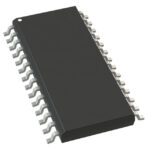 LT8390AEFE#PBF

The activity of extra discounts on wholesale prices is in full swing…
Please fill in your contact information and we will send you the latest wholesale price list.





