 ChipApex | Global Electronic Components Supplier

SEARCH
Search Product
Search Post
— IC芯片 | 连接器 | 传感器 | 被动器件 —
Search productSearch post
— IC芯片 | 连接器 | 传感器 | 被动器件 —
Consult the customer manager about the wholesale price.
consultation hotline:86-132-6715-2157
email:[email protected]
Contact the product manager for consultation. One-stop consultation is available.
Do you want a lower wholesale price? Please send us your inquiry and we will reply immediately.
The LT8390AHUFD#PBF is a synchronous four-switch buck-boost DC/DC controller manufactured by Analog Devices Inc. It operates within an input voltage range of 4 V to 60 V and supports output voltages from 0 V to 60 V. The device features an adjustable switching frequency between 600 kHz and 2 MHz, with a maximum static current of 2.1 mA. It utilizes a QFN-28 package and functions across a temperature range of -40°C to +150°C.
Verify the specific suffix 'HUFD' against the official datasheet to confirm the extended high-temperature rating (+150°C) compared to standard variants. Ensure RoHS compliance documentation matches the '#PBF' designation. Cross-reference the manufacturer part number with authorized distributors to avoid counterfeit components, as supply availability may be restricted in certain regions.
Select this component when input voltage fluctuates significantly around the target output level. The wide input range accommodates single-cell lithium-ion batteries or automotive loads. Consider the thermal performance of the exposed pad in the QFN-28 package for high-power designs. Verify that the required switching frequency aligns with external inductor selection constraints.
This part belongs to the LT8390 family of synchronous buck-boost controllers. It shares the core architecture with variants like LT8390AIUFD#PBF but differs in temperature grading. The HUFD suffix indicates an industrial/high-temperature grade suitable for harsh environments where standard commercial parts may fail.
LT8390AIUFD#PBF offers similar functionality but is rated for a maximum operating temperature of +125°C instead of +150°C. LT8390EUFD is another variant within the same series. Substitution requires verifying thermal requirements and ensuring pinout compatibility remains identical across the family.
Pass-thru mode allows the controller to bypass switching when the input voltage equals the output voltage, thereby eliminating switching noise and improving efficiency in battery-connected applications.
It allows continuous current flow regardless of whether the input voltage is higher, lower, or equal to the output voltage, simplifying design for variable input sources like solar panels or batteries.
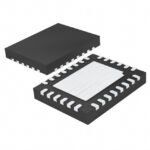 LT8390AHUFD#PBF

The activity of extra discounts on wholesale prices is in full swing…
Please fill in your contact information and we will send you the latest wholesale price list.





