 ChipApex | Global Electronic Components Supplier

SEARCH
Search Product
Search Post
— IC芯片 | 连接器 | 传感器 | 被动器件 —
Search productSearch post
— IC芯片 | 连接器 | 传感器 | 被动器件 —
Consult the customer manager about the wholesale price.
consultation hotline:86-132-6715-2157
email:[email protected]
Contact the product manager for consultation. One-stop consultation is available.
Do you want a lower wholesale price? Please send us your inquiry and we will reply immediately.
The LT8390EUFD#WTRPBF is a synchronous 4-switch buck-boost DC/DC controller from Analog Devices Inc., designed for high-efficiency power conversion. It operates with an input voltage range of 0 to 48 V and supports output voltages up to 25 V at currents reaching 5 A, delivering up to 125 W of output power. The device features a switching frequency between 190 kHz and 630 kHz, achieving efficiencies up to 98%. Packaged in a 28-QFN (4x5) format, it includes spread spectrum technology to reduce EMI and supports clock synchronization.
Verify the exact suffix #WTRPBF confirms the tape-and-reel packaging variant, distinct from tube-packaged equivalents like #WPBF. Ensure compatibility with the intended PCB footprint for the 28-QFN package. Confirm that the operating temperature range meets the specific environmental requirements of the target application. Cross-reference the datasheet revision date to ensure all electrical characteristics align with the latest design specifications.
Select this component when a non-isolated buck-boost solution is required for wide input voltage ranges. It is suitable for applications demanding high efficiency and low EMI, such as renewable energy systems. Consider the 28-QFN package size constraints and thermal management needs. Evaluate if the integrated spread spectrum feature sufficiently meets EMI standards without additional filtering. Compare against isolated topologies if galvanic isolation is strictly required by the system architecture.
The LT8390 series represents Analog Devices' approach to high-power, non-isolated DC/DC conversion. The EUFD variant specifically denotes the extended temperature grade and QFN packaging. This controller is part of a broader family including evaluation boards like DC2825A and DC2457A, which facilitate rapid prototyping. It complements other Linear Technology power management solutions by offering robust performance in compact form factors for modern electronic designs.
Public confirmed substitute part numbers are not available in the provided documentation. Direct replacements should be verified through official Analog Devices cross-reference tools or distributor databases to ensure pinout and electrical parameter compatibility.
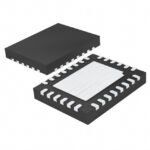 LT8390EUFD#WTRPBF

The activity of extra discounts on wholesale prices is in full swing…
Please fill in your contact information and we will send you the latest wholesale price list.





