 ChipApex | Global Electronic Components Supplier

SEARCH
Search Product
Search Post
— IC芯片 | 连接器 | 传感器 | 被动器件 —
Search productSearch post
— IC芯片 | 连接器 | 传感器 | 被动器件 —
Consult the customer manager about the wholesale price.
consultation hotline:86-132-6715-2157
email:[email protected]
Contact the product manager for consultation. One-stop consultation is available.
Do you want a lower wholesale price? Please send us your inquiry and we will reply immediately.
The LT8390HFE#TRPBF is a synchronous 4-switch buck-boost DC/DC controller from Analog Devices. It regulates output voltage, input current, or output current when the input voltage is above, below, or equal to the output voltage. The device features an adjustable switching frequency ranging from 150 kHz to 650 kHz and supports spread spectrum modulation. It operates with an input voltage range of 4 V to 60 V and maintains a maximum quiescent current of 2.1 mA. The component is housed in a TSSOP-28 package and functions within a temperature range of -40°C to +150°C.
Verify the specific suffix TRPBF indicates tape and reel packaging rather than tube packaging when sourcing components. Confirm that the order matches the exact part number LT8390HFE#TRPBF to ensure correct operational parameters and package type. Cross-reference the manufacturer's latest documentation for any updates regarding RoHS compliance or pinout configurations before finalizing procurement orders.
Select this controller when application requirements demand regulation across input voltages both higher and lower than the target output. The adjustable frequency range allows optimization for efficiency versus component size trade-offs. Ensure external MOSFET selection aligns with the controller's drive capabilities and the expected current loads. Consider thermal management strategies given the high operating temperature rating and potential power dissipation in compact packages.
This component belongs to the LT8390 family of synchronous buck-boost controllers designed by Analog Devices. It shares architectural similarities with other devices in the series but is distinguished by its specific frequency range and packaging configuration. The HFE variant denotes the industrial temperature grade and TSSOP-28 package form factor, differentiating it from other pinouts or temperature ratings within the broader product line.
LT8390HFE#PBF serves as a direct functional equivalent differing only in packaging format, utilizing tubes instead of tape and reel. Verify compatibility with existing assembly processes when substituting between these variants. No other cross-model replacements are confirmed in the provided data.
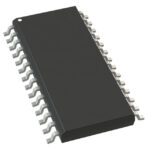 LT8390HFE#TRPBF

The activity of extra discounts on wholesale prices is in full swing…
Please fill in your contact information and we will send you the latest wholesale price list.




