 ChipApex | Global Electronic Components Supplier
SEARCH
Search Product
Search Post
— IC芯片 | 连接器 | 传感器 | 被动器件 —
Search productSearch post
— IC芯片 | 连接器 | 传感器 | 被动器件 —
Consult the customer manager about the wholesale price.
consultation hotline:86-132-6715-2157
email:[email protected]
Contact the product manager for consultation. One-stop consultation is available.
Do you want a lower wholesale price? Please send us your inquiry and we will reply immediately.
The LT8580IDD#TRPBF is a synchronous boost, inverting, and SEPIC DC/DC converter manufactured by Analog Devices Inc. It operates with an input voltage range of 2.9V to 40V and delivers a switch current of 1.2A. The adjustable output voltage spans from 1.2V to 65V. Key electrical parameters include a switching frequency between 200kHz and 1.5MHz and a quiescent current of 1.2mA. The device supports positive or negative output configurations and functions within a junction temperature range of -40°C to 150°C.
Verify the complete part number LT8580IDD#TRPBF against official Analog Devices documentation to ensure correct suffixes for package type (DFN-8) and tape-and-reel packaging. Confirm RoHS3 compliance and material declaration status prior to integration. Cross-reference datasheet revision history for any updates to electrical characteristics or thermal recommendations that may affect design validation.
Select this component when designing circuits requiring simultaneous boost, inverting, or SEPIC capabilities within a single IC. Ensure the application demands an input voltage up to 40V and requires a switch current of at least 1.2A. Consider the 8-WFDFN package constraints for thermal dissipation and PCB layout requirements. Verify that the required output voltage range falls within the 1.2V to 65V limit and that the operating temperature exceeds -40°C.
This part belongs to the LT8580 family of high-efficiency DC/DC converters designed for versatile power conversion tasks. It complements other Analog Devices PMIC solutions by offering multi-topology flexibility in a compact footprint. The IDD variant specifically denotes the DFN-8 package with industrial temperature rating and tape-and-reel delivery format.
LT8580HDD#TRPBF offers similar specifications with potential differences in thermal performance or pin compatibility due to package variations. LT8580EDD#TRPBF provides equivalent functionality but may differ in temperature grade or manufacturing lot specifications. Verify pin-to-pin compatibility and electrical parameter alignment before substitution.
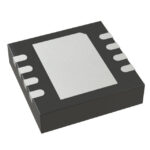 LT8580IDD#TRPBF
The activity of extra discounts on wholesale prices is in full swing…
Please fill in your contact information and we will send you the latest wholesale price list.





