 ChipApex | Global Electronic Components Supplier
SEARCH
Search Product
Search Post
— IC芯片 | 连接器 | 传感器 | 被动器件 —
Search productSearch post
— IC芯片 | 连接器 | 传感器 | 被动器件 —
Consult the customer manager about the wholesale price.
consultation hotline:86-132-6715-2157
email:[email protected]
Contact the product manager for consultation. One-stop consultation is available.
Do you want a lower wholesale price? Please send us your inquiry and we will reply immediately.
The LT8602EUJ#PBF is a quad-channel, current-mode monolithic synchronous step-down regulator from Analog Devices. It integrates four independent buck converters synchronized to a single adjustable oscillator operating between 250 kHz and 2.2 MHz. The device supports an input voltage range of 3 V to 42 V for high-voltage channels and 2.6 V to 5.5 V for low-voltage channels. Output currents reach up to 1.5 A on OUT1, 2.5 A on OUT2, and 1.8 A on the low-voltage outputs. Quiescent current is specified at 70 µA, with micropower Burst Mode operation reducing it to 30 µA. It features a programmable power-on reset and operates within a temperature range of -40°C to +125°C in a 48-lead LQFP package.
Verify the specific suffix against official Analog Devices documentation to confirm pinout compatibility and thermal characteristics. Ensure the selected variant matches the required output current ratings for all four channels. Confirm RoHS compliance status and moisture sensitivity level prior to assembly planning. Cross-reference the datasheet revision date to validate parameter accuracy.
Select this component when a compact solution for four distinct regulated outputs is required. It is suitable for designs where space constraints preclude using discrete regulators. Consider the thermal performance of the LQFP package relative to the total load current. Evaluate the need for external compensation components based on the desired switching frequency and output capacitance requirements.
This part belongs to the LT8602 family of quad-channel synchronous step-down regulators. It shares architectural similarities with the LT8601, which offers three channels, and other members of the LT86xx series designed for high-efficiency power management. The device represents a consolidated approach to powering complex systems by integrating multiple converters into a single monolithic IC.
LT8602ILXE#PBF: Offers identical electrical specifications but utilizes a 48-lead eLQFP package instead of the EUJ LQFP form factor.
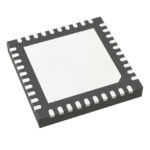 LT8602EUJ#PBF
The activity of extra discounts on wholesale prices is in full swing…
Please fill in your contact information and we will send you the latest wholesale price list.




