 ChipApex | Global Electronic Components Supplier
SEARCH
Search Product
Search Post
— IC芯片 | 连接器 | 传感器 | 被动器件 —
Search productSearch post
— IC芯片 | 连接器 | 传感器 | 被动器件 —
Consult the customer manager about the wholesale price.
consultation hotline:86-132-6715-2157
email:[email protected]
Contact the product manager for consultation. One-stop consultation is available.
Do you want a lower wholesale price? Please send us your inquiry and we will reply immediately.
The LT8610AHMSE-5#PBF is a synchronous step-down switching regulator from Analog Devices, featuring a 42V input range and 3.5A output current capability. It utilizes an MSOP-16 package with exposed pad for thermal management. The device operates at switch frequencies between 200 kHz and 2.2 MHz, ensuring high efficiency through synchronous rectification. Quiescent current in Burst Mode operation is maintained below 2.5 µA, supporting low standby power consumption. The component supports fixed 5V output configuration and includes integrated soft-start functionality to limit inrush current during startup sequences.
Verify the specific suffix 'HMSE' indicates the MSOP-16 package variant when sourcing. Confirm that the '#PBF' designation ensures lead-free plating and RoHS compliance as per manufacturer standards. Cross-reference the full part number against official Analog Devices documentation to ensure compatibility with required thermal and electrical specifications before finalizing procurement orders.
Select this component for applications demanding high efficiency across wide input voltage ranges. The fixed 5V output simplifies design for standard logic supplies. Consider the thermal performance of the MSOP-16 package relative to the expected load current. Ensure the chosen switching frequency aligns with available inductor sizes and EMI requirements for the target enclosure.
This part belongs to the LT8610A family of micropower buck regulators. It shares architectural similarities with other members like the LT8610AB but may differ in specific temperature grades or internal optimizations. The family is designed for space-constrained applications requiring robust performance. Development kits such as DC2012A are available for evaluation.
LT8610ABHMSE-5#PBF is a documented alternative within the same product family. Verify if the 'A' versus 'AB' designation implies any functional differences in ripple characteristics or temperature range according to the latest datasheet revisions before substituting.
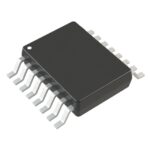 LT8610AHMSE-5#PBF
The activity of extra discounts on wholesale prices is in full swing…
Please fill in your contact information and we will send you the latest wholesale price list.





