 ChipApex | Global Electronic Components Supplier
SEARCH
Search Product
Search Post
— IC芯片 | 连接器 | 传感器 | 被动器件 —
Search productSearch post
— IC芯片 | 连接器 | 传感器 | 被动器件 —
Consult the customer manager about the wholesale price.
consultation hotline:86-132-6715-2157
email:[email protected]
Contact the product manager for consultation. One-stop consultation is available.
Do you want a lower wholesale price? Please send us your inquiry and we will reply immediately.
The LT8610IMSE#TRPBF is a synchronous step-down switching regulator manufactured by Analog Devices Inc. It operates with an input voltage range of 3.4V to 42V and delivers a maximum output current of 2.5A. The device features an adjustable output voltage starting from a minimum of 0.97V, with a maximum output capability of 40V. It supports a programmable switching frequency between 200kHz and 2.2MHz. The component is housed in a 16-TFSOP package with an exposed pad (16-MSOP-EP) and is rated for junction temperatures ranging from -40°C to 125°C.
Verify the specific suffix TRPBF indicates tape and reel packaging when ordering. Confirm the IMSE variant matches the required 2.5A output current and 0.97V minimum reference voltage. Ensure the 16-MSOP-EP package footprint aligns with the target PCB layout. Cross-reference the manufacturer part number directly with official Analog Devices documentation to avoid counterfeit components.
Select this model when an input voltage up to 42V is required but higher current capacity than the LT8610HMSE is unnecessary. The 2.5A rating suits applications needing moderate power density. Choose the adjustable version if the system requires a custom output voltage rather than fixed options. Consider the 16-MSOP-EP package for its balance of thermal performance and small form factor in dense designs.
This component belongs to the LT8610 family of micropower synchronous buck regulators. It shares architectural similarities with the LT8609 and LT8610AB series but differs in output current specifications and internal reference voltages. The IMSE designation specifically denotes the 2.5A current rating within the broader LT8610 product line, distinguishing it from higher or lower current variants.
LT8610ACIMSE#TRPBF offers similar functionality with a 3.5A output rating and 0.8V reference. LT8610ABIMSE#TRPBF provides comparable performance with identical 3.5A capacity. Verify that substitute parts match the required input voltage range and package dimensions before integration.
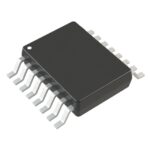 LT8610IMSE#TRPBF
The activity of extra discounts on wholesale prices is in full swing…
Please fill in your contact information and we will send you the latest wholesale price list.





