ChipApex | Global Electronic Components Supplier
SEARCH
Search Product
Search Post
— IC芯片 | 连接器 | 传感器 | 被动器件 —
Search productSearch post
— IC芯片 | 连接器 | 传感器 | 被动器件 —
Consult the customer manager about the wholesale price.
consultation hotline:86-132-6715-2157
email:[email protected]
Contact the product manager for consultation. One-stop consultation is available.
Do you want a lower wholesale price? Please send us your inquiry and we will reply immediately.
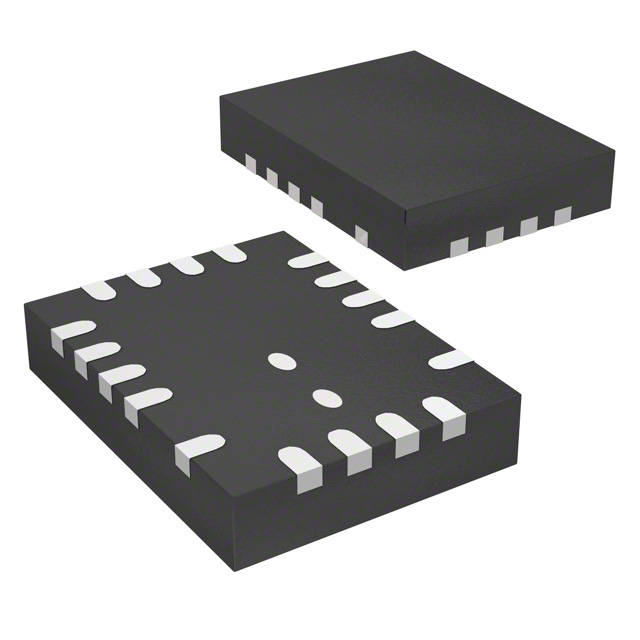
The LT8614HUDC#PBF is a synchronous step-down switching regulator from Analog Devices, featuring Silent Switcher technology to minimize electromagnetic interference. It operates with an input voltage range of 3.4 V to 42 V and delivers up to 4 A of output current. The device supports adjustable output voltages and offers a programmable switching frequency between 200 kHz and 3 MHz. It includes a shutdown feature and maintains a low quiescent current of 1.7 uA. Designed for robust performance, it functions within a temperature range of -40°C to +125°C and is housed in a compact QFN-18 package.
Verify the specific suffix codes against the official datasheet to ensure correct thermal grade and packaging configuration. Confirm that the requested variant matches the required operating temperature range and pinout compatibility. Cross-reference the manufacturer part number with authorized distributor catalogs to validate authenticity and traceability before finalizing procurement orders.
Select this component when design constraints demand low electromagnetic interference alongside high power density. Consider the wide input voltage capability for applications with varying supply sources. Evaluate the thermal performance within the QFN-18 package relative to the expected load current and ambient conditions to ensure reliable operation under maximum stress scenarios.
This part belongs to the LT8614 family of Silent Switcher regulators, designed to address noise-sensitive applications. It shares architectural similarities with other members but is distinguished by its specific 4 A current rating and 42 V input limit. The family emphasizes compact footprint solutions for modern power management needs in space-constrained environments.
LT8614IUDC#PBF: Identical electrical specifications with different industrial temperature grade designation.
The device supports a maximum input voltage of 42 V.
No, the integrated Silent Switcher architecture minimizes radiated emissions, typically eliminating the need for external shielding.
 LT8614HUDC#PBF
The activity of extra discounts on wholesale prices is in full swing…
Please fill in your contact information and we will send you the latest wholesale price list.