 ChipApex | Global Electronic Components Supplier
SEARCH
Search Product
Search Post
— IC芯片 | 连接器 | 传感器 | 被动器件 —
Search productSearch post
— IC芯片 | 连接器 | 传感器 | 被动器件 —
Consult the customer manager about the wholesale price.
consultation hotline:86-132-6715-2157
email:[email protected]
Contact the product manager for consultation. One-stop consultation is available.
Do you want a lower wholesale price? Please send us your inquiry and we will reply immediately.
The LT8620EUDD is a compact, high-efficiency, high-speed synchronous monolithic step-down switching regulator from Analog Devices Inc. It accepts a wide input voltage range of 5.5V to 65V and delivers up to 2A output current. The device features a low quiescent current of 2.5µA and supports an adjustable output voltage starting from 0.97V. Operating with a buck-synchronous topology, it achieves efficiencies up to 94%. Packaged in a 24-WFQFN exposed pad for surface mount applications, it integrates top and bottom power switches to minimize external component requirements.
Verify the complete part number including suffixes such as #PBF or #TRPBF to ensure correct packaging and lead-free compliance. Confirm the package type matches the design footprint, specifically the 24-WFQFN exposed pad configuration. Cross-reference the manufacturer's latest datasheet for any updates on recommended operating conditions and thermal characteristics before finalizing procurement specifications.
Select this component when a wide input voltage range up to 65V is required alongside high efficiency and low standby current. Ensure the application demands a synchronous buck topology with an adjustable output voltage down to 0.97V. Verify that the PCB layout can accommodate the 24-WFQFN package and that thermal management strategies align with the exposed pad requirements for optimal performance under load.
The LT8620EUDD belongs to the LT8620 family of synchronous step-down regulators manufactured by Analog Devices Inc. This series is designed for applications requiring high efficiency and minimal external components. The EUDD designation specifies the specific package variant, which is a 24-lead WDFN (or WFQFN) with an exposed pad, suitable for surface-mount assembly in space-constrained designs.
Consult Analog Devices documentation for direct pin-compatible alternatives within the same product family. Verify that any substitute maintains the 65V input rating and 2A output capability. Ensure thermal performance and package dimensions match the existing board layout constraints before implementing any cross-references.
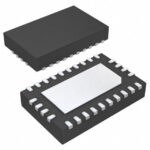 LT8620EUDD
The activity of extra discounts on wholesale prices is in full swing…
Please fill in your contact information and we will send you the latest wholesale price list.





