 ChipApex | Global Electronic Components Supplier

SEARCH
Search Product
Search Post
— IC芯片 | 连接器 | 传感器 | 被动器件 —
Search productSearch post
— IC芯片 | 连接器 | 传感器 | 被动器件 —
Consult the customer manager about the wholesale price.
consultation hotline:86-132-6715-2157
email:[email protected]
Contact the product manager for consultation. One-stop consultation is available.
Do you want a lower wholesale price? Please send us your inquiry and we will reply immediately.
The LT8705EUHF#TRPBF is a high-performance synchronous four-switch buck-boost switching regulator controller manufactured by Analog Devices Inc. It operates with an input voltage range of 2.8V to 80V and supports output voltages from 1.3V to 80V. The device delivers up to 10A of output current with a quiescent current of 2.65mA. It features a programmable switching frequency between 100kHz and 400kHz and functions within a temperature range of -40°C to +125°C. Packaged in a 38-QFN (5x7) format, it integrates input and output current limiting loops.
Verify component authenticity through authorized distribution channels due to limited supply status. Confirm package integrity and pinout alignment with design specifications. Review manufacturer datasheets for latest electrical characteristics and thermal performance data. Ensure compatibility with external passive components and PCB layout requirements before integration into final assemblies.
Select this controller for applications demanding wide input voltage flexibility and high efficiency across varying load conditions. Consider the 38-QFN package for compact designs requiring robust thermal dissipation. Evaluate the 10A current capability against peak load requirements. Verify that the 100kHz to 400kHz frequency range aligns with electromagnetic interference constraints and inductor selection criteria.
This component belongs to the LT8705 family of buck-boost regulators designed for versatile power management solutions. It serves as a DC-DC switching controller rather than a complete integrated circuit, requiring external power switches. The EUHF suffix denotes the specific QFN package variant optimized for surface-mount assembly and thermal performance in dense electronic layouts.
LT8705EFE#PBF offers identical electrical functionality in a TSSOP-EP-38 package. LT8705AIUHF provides similar performance in a QFN-38 package with potentially different temperature grades. Verify pin-to-pin compatibility and thermal pad connections when substituting these variants.
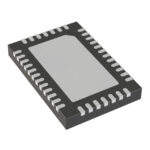 LT8705EUHF#TRPBF

The activity of extra discounts on wholesale prices is in full swing…
Please fill in your contact information and we will send you the latest wholesale price list.





