ChipApex | Global Electronic Components Supplier

SEARCH
Search Product
Search Post
— IC芯片 | 连接器 | 传感器 | 被动器件 —
Search productSearch post
— IC芯片 | 连接器 | 传感器 | 被动器件 —
Consult the customer manager about the wholesale price.
consultation hotline:86-132-6715-2157
email:[email protected]
Contact the product manager for consultation. One-stop consultation is available.
Do you want a lower wholesale price? Please send us your inquiry and we will reply immediately.
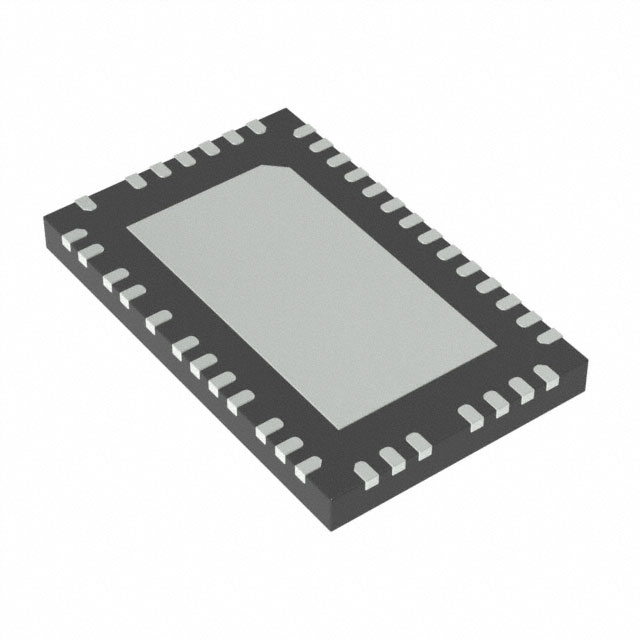
The LT8708EUHG#PBF is an Analog Devices synchronous four-switch buck-boost DC/DC controller designed for bidirectional power applications. It supports input voltages from 2.8V to 80V and output voltages from 1.3V to 80V, accommodating scenarios where VIN is higher, lower, or equal to VOUT. The device features a maximum switching frequency of 400kHz and typical output current capability of 15A. Operating within a temperature range of -40°C to +125°C, it utilizes a 40-pin QFN (5mm × 8mm) package with exposed pad. Key electrical specifications include up to 99% synchronous rectification efficiency and support for DCM, CCM, HCM, and Burst Mode operation.
Verify the specific suffix #PBF indicates lead-free RoHS compliance when ordering. Confirm that the EUHG variant meets the required industrial temperature range of -40°C to +125°C for your application environment. Ensure external components such as MOSFETs and inductors are rated for the 80V system voltage. Check availability status as supply constraints may affect delivery schedules for this component.
Select the LT8708EUHG#PBF for industrial applications requiring robust bidirectional buck-boost control. Choose the HUHG variant if the operating environment exceeds 125°C, as it supports temperatures up to 150°C. Consider the eLQFP package option if surface mount area constraints favor a larger footprint over the standard QFN form factor. Evaluate the need for six independent regulation loops against simpler single-loop requirements to optimize design complexity.
This component belongs to the LT8708 series of high-performance buck-boost controllers from Analog Devices. The series includes variants like LT8708IUHG and LT8708HUHG, differentiated primarily by temperature ratings and minor testing specifications. All models share the same core topology and functionality, supporting AEC-Q100 automotive certification standards for reliability in harsh environments.
Direct substitutes within the same family include LT8708IUHG and LT8708HUHG. Note that these variants differ in maximum operating temperature rather than electrical performance. No cross-family replacements are officially documented; alternative designs require separate validation.
 LT8708EUHG#PBF

The activity of extra discounts on wholesale prices is in full swing…
Please fill in your contact information and we will send you the latest wholesale price list.