 ChipApex | Global Electronic Components Supplier

SEARCH
Search Product
Search Post
— IC芯片 | 连接器 | 传感器 | 被动器件 —
Search productSearch post
— IC芯片 | 连接器 | 传感器 | 被动器件 —
Consult the customer manager about the wholesale price.
consultation hotline:86-132-6715-2157
email:[email protected]
Contact the product manager for consultation. One-stop consultation is available.
Do you want a lower wholesale price? Please send us your inquiry and we will reply immediately.
The LT8711EUDC#TRPBF is a micropower synchronous multitopology controller from Analog Devices, designed for flexible DC-DC conversion. It supports buck, boost, SEPIC, ZETA, and non-synchronous configurations with a 42V input capability. The device operates in a 20-QFN (3x4) package and features current mode PWM control. Key electrical parameters include an operating temperature range of -40°C to 125°C (TJ) for the E-grade variant, though some sources cite 0 to 85°C. It includes enable, frequency control, and soft start functions.
Verify the specific grade suffix (E vs U) against your thermal requirements, as operating temperature ranges differ between variants. Confirm the package type matches your PCB footprint, specifically the 20-QFN (3x4) dimensions. Ensure the trailing #TRPBF indicates tape-and-reel packaging if automated assembly is required. Cross-reference the manufacturer's latest datasheet for any updates on RoHS compliance or lead-free status before finalizing orders.
Select this component when a single IC must handle multiple converter topologies to reduce bill of materials complexity. The 42V input rating allows compatibility with higher voltage bus systems compared to standard 36V parts. Consider the E-grade temperature range if the application environment exceeds commercial limits. The QFN package offers a compact solution for space-constrained designs while maintaining thermal performance through the exposed pad.
This part belongs to the LT8711 family of micropower synchronous multitopology controllers. It is manufactured by Analog Devices Inc., formerly Linear Technology. The LT8711 series is designed to replace discrete solutions by integrating control logic for various DC-DC architectures into a single chip, simplifying design and improving efficiency in portable and industrial applications.
LT8711EFE#PBF is a documented alternative within the same family. Verify pinout compatibility and thermal specifications when substituting. Check if the replacement part meets the specific input voltage and temperature range requirements of the original design.
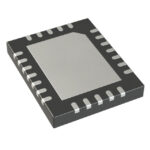 LT8711EUDC#TRPBF

The activity of extra discounts on wholesale prices is in full swing…
Please fill in your contact information and we will send you the latest wholesale price list.





