 ChipApex | Global Electronic Components Supplier
SEARCH
Search Product
Search Post
— IC芯片 | 连接器 | 传感器 | 被动器件 —
Search productSearch post
— IC芯片 | 连接器 | 传感器 | 被动器件 —
Consult the customer manager about the wholesale price.
consultation hotline:86-132-6715-2157
email:[email protected]
Contact the product manager for consultation. One-stop consultation is available.
Do you want a lower wholesale price? Please send us your inquiry and we will reply immediately.
The LTC1068-50IG#PBF is a clock-tunable, quad second-order switched-capacitor filter building block from Analog Devices. It integrates four matched low-noise sections within a 28-pin SSOP package. The device features a nominal clock-to-center frequency ratio of 50:1. It operates on supply voltages ranging from 3.14V to ±5.5V. Key electrical parameters include a typical power supply current of 4.5mA at single 5V operation and a maximum clock frequency of 3.4MHz under specific conditions. The component supports industrial temperature ranges from -40°C to +85°C.
Verify the specific ordering suffix against manufacturer documentation to confirm lead-free finish and package type. Ensure the selected variant matches the required operating temperature range for the intended application environment. Cross-reference part numbers with official distributor catalogs to confirm availability and authenticity before procurement.
Select this component based on the required clock-to-center frequency ratio, which is fixed at 50:1 for this specific model. Evaluate the available operating modes to determine if external resistors are needed to adjust the ratio further. Consider the power supply voltage constraints and the maximum achievable Q factor relative to the desired center frequency when designing the circuit topology.
This component belongs to the LTC1068 series of universal switched-capacitor filters. The series includes variants with different nominal ratios such as 200:1, 100:1, and 25:1. All members share the same internal architecture and pinout but differ in their default clock-to-frequency scaling factors. This allows designers to choose the optimal base ratio for their specific bandwidth requirements.
Compatible substitutes within the family include LTC1068-200IG#PBF, LTC1068IG#PBF, and LTC1068-25IG#PBF. These parts offer different nominal clock-to-center frequency ratios while maintaining identical pinouts and package styles. Verify that the alternative ratio meets the design specifications before substitution.
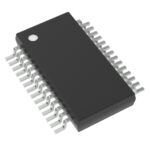 LTC1068-50IG#PBF
The activity of extra discounts on wholesale prices is in full swing…
Please fill in your contact information and we will send you the latest wholesale price list.





