 ChipApex | Global Electronic Components Supplier
SEARCH
Search Product
Search Post
— IC芯片 | 连接器 | 传感器 | 被动器件 —
Search productSearch post
— IC芯片 | 连接器 | 传感器 | 被动器件 —
Consult the customer manager about the wholesale price.
consultation hotline:86-132-6715-2157
email:[email protected]
Contact the product manager for consultation. One-stop consultation is available.
Do you want a lower wholesale price? Please send us your inquiry and we will reply immediately.
The LTC1069-6CS8#TRPBF is a precision, low-power voltage reference IC manufactured by Analog Devices Inc. It belongs to the LTC1069 family and is housed in an 8-pin SOIC package. The device provides a fixed output voltage of 2.5V with high accuracy and low temperature drift. It operates from a supply voltage range of 2.7V to 36V and draws a typical quiescent current of 40µA. Key electrical characteristics include an initial accuracy of ±0.1% and a temperature coefficient of 3ppm/°C. The component is designed for applications requiring stable reference voltages in battery-powered and industrial systems.
Verify the complete part number including suffixes such as TRPBF against official Analog Devices documentation to ensure correct packaging and lead-free compliance. Confirm RoHS status and specific lot traceability requirements with authorized distributors prior to ordering. Check for any regional distribution restrictions or alternative package options if standard availability is limited.
Select this component when a fixed 2.5V reference with ±0.1% initial accuracy is required. Ensure the input voltage remains within the 2.7V to 36V range. Consider thermal management if operating near maximum temperature limits. Verify that the 40µA quiescent current aligns with system power budget constraints compared to higher precision alternatives.
This part is part of the LTC1069 series of micropower voltage references. It shares architectural similarities with other members like the LTC1069-1 and LTC1069-5 but differs in its fixed 2.5V output setting. The CS8 suffix indicates the commercial temperature range and SOIC-8 package type. It serves as a stable reference source for ADCs and DACs in signal conditioning chains.
Direct substitutes may include other LTC1069 variants with different output voltages if circuit scaling is possible. Cross-reference with LM4040 or REF50xx series for pin-compatible alternatives, though accuracy and drift specifications may differ. Verify thermal performance and load regulation characteristics before swapping.
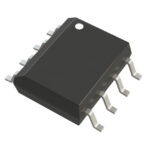 LTC1069-6CS8#TRPBF
The activity of extra discounts on wholesale prices is in full swing…
Please fill in your contact information and we will send you the latest wholesale price list.





