 ChipApex | Global Electronic Components Supplier
SEARCH
Search Product
Search Post
— IC芯片 | 连接器 | 传感器 | 被动器件 —
Search productSearch post
— IC芯片 | 连接器 | 传感器 | 被动器件 —
Consult the customer manager about the wholesale price.
consultation hotline:86-132-6715-2157
email:[email protected]
Contact the product manager for consultation. One-stop consultation is available.
Do you want a lower wholesale price? Please send us your inquiry and we will reply immediately.
The LTC1069-7CS8#PBF is a monolithic, clock-tunable, linear phase, 8th order lowpass filter in an SO-8 package. The cutoff frequency is set by an external clock and equals fCLK/25. It operates from single 5V to dual ±5V supplies, with clock tunability up to 120kHz (single supply) or 200kHz (dual supply). Key electrical parameters include a passband gain of –1 V/V, wideband noise of 140μV RMS, and attenuation of –43dB at 2×fCUTOFF. Power supply current ranges from 13mA to 29mA depending on voltage and clock speed.
Verify the specific suffix #PBF indicates lead-free finish and tube packaging. Confirm the 'C' grade corresponds to the commercial temperature range of 0°C to 70°C. Ensure the ordering part number matches the exact datasheet specification to avoid functional discrepancies related to temperature or packaging variations.
Select this component when a higher-order filter response than standard Bessel types is required without complex discrete designs. Consider the internal sampling rate ratio of 50:1 relative to the cutoff frequency to evaluate aliasing risks. Verify that the available clock source can meet the maximum rise/fall time specifications of 1μs for optimal performance.
This device belongs to the LTC1069 family of monolithic switched-capacitor filters. It shares the same 8th order topology as other variants but is specifically tuned for a raised cosine response. Unlike some family members, it features a fixed passband gain of –1 V/V and is optimized for operation within the SO-8 footprint.
The LT1229CS8#PBF is listed as a high-speed operational amplifier rather than a direct filter replacement. For similar filter functions, consult the manufacturer's guide for parts like the LTC1064-7 or LTC1164-7, which offer different noise or power trade-offs while maintaining the 8th order linear phase architecture.
The cutoff frequency is equal to the external clock frequency divided by 25 (fCUTOFF = fCLK / 25).
With dual ±5V supplies, the device supports clock frequencies up to 5MHz, allowing a maximum cutoff frequency of 200kHz.
Yes, it operates from a single 5V supply up to dual ±5V supplies, with a typical maximum cutoff of 120kHz on a single supply.
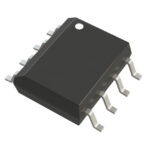 LTC1069-7CS8#PBF
The activity of extra discounts on wholesale prices is in full swing…
Please fill in your contact information and we will send you the latest wholesale price list.





