 ChipApex | Global Electronic Components Supplier
SEARCH
Search Product
Search Post
— IC芯片 | 连接器 | 传感器 | 被动器件 —
Search productSearch post
— IC芯片 | 连接器 | 传感器 | 被动器件 —
Consult the customer manager about the wholesale price.
consultation hotline:86-132-6715-2157
email:[email protected]
Contact the product manager for consultation. One-stop consultation is available.
Do you want a lower wholesale price? Please send us your inquiry and we will reply immediately.
The LTC1164-5CSW#TRPBF is a monolithic 8th-order active lowpass filter offering pin-selectable Butterworth or Bessel frequency responses. It features a clock-tunable cutoff frequency with a maximum of 20kHz, driven by a TTL/CMOS-compatible clock input. The device consumes 4mA supply current with ±5V supplies and operates on a single 5V supply. Key electrical parameters include 100µVRMS wideband noise, THD less than 0.02%, and a maximum clock frequency of 1MHz at ±5V or single 5V operation. It is housed in a 16-lead SO Wide package.
Verify the specific suffix #TRPBF indicates lead-free tape and reel packaging. Confirm the CSW designation corresponds to the 16-lead SO Wide plastic package. Ensure the C grade meets the required -40°C to 85°C operating temperature range for the target application environment.
Select this component when an 8th-order response is required with minimal external parts. Choose the Butterworth mode for maximally flat passband gain or Bessel mode for linear phase characteristics. Ensure the available clock frequency allows for the desired cutoff ratio (50:1, 100:1, or 140:1) based on the specific noise and aliasing requirements.
This part belongs to the LTC1164 family of low-power active filters. It is pin-compatible with the LTC1064-2 and LTC1064-3, allowing for direct upgrades or replacements in existing designs that utilize those earlier generations. The device integrates the necessary switched-capacitor circuitry into a single monolithic chip.
The LTC1064-2 and LTC1064-3 are pin-compatible alternatives within the same family. Verify that the legacy parts meet the specific voltage and temperature requirements if substituting into a design originally specified for the LTC1164-5.
The response is determined by the DC level at Pin 10. Connecting Pin 10 to V+ provides a Butterworth response, while connecting it to ground provides a Bessel response.
The maximum clock frequency is 1.5MHz with ±7.5V supplies, and 1MHz with ±5V or single 5V supplies.
Double-sampling (50:1 ratio) allows the input signal frequency to reach twice the clock frequency before aliasing occurs, effectively doubling the anti-aliasing protection compared to the standard 100:1 ratio.
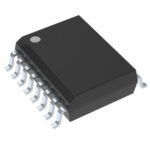 LTC1164-5CSW#TRPBF
The activity of extra discounts on wholesale prices is in full swing…
Please fill in your contact information and we will send you the latest wholesale price list.





