 ChipApex | Global Electronic Components Supplier
SEARCH
Search Product
Search Post
— IC芯片 | 连接器 | 传感器 | 被动器件 —
Search productSearch post
— IC芯片 | 连接器 | 传感器 | 被动器件 —
Consult the customer manager about the wholesale price.
consultation hotline:86-132-6715-2157
email:[email protected]
Contact the product manager for consultation. One-stop consultation is available.
Do you want a lower wholesale price? Please send us your inquiry and we will reply immediately.
The LTC1562AIG is a very low noise, low distortion active RC quad universal filter manufactured by Analog Devices Inc. It features four independent second-order filter blocks capable of center frequencies from 10kHz to 150kHz. The A-grade variant provides a typical center frequency accuracy of -0.3%. It operates on single or dual supplies ranging from 4.75V to 10.5V total. Key electrical parameters include a typical signal-to-noise ratio of 97dB with a single 5V supply and 103dB with a -5V supply. Total harmonic distortion is typically -96dB at 20kHz input. The device utilizes a 20-lead plastic SSOP package.
Verify the specific ordering suffix against the manufacturer's current datasheet to confirm package type and temperature range. Confirm availability status as discontinued parts may require alternative sourcing strategies. Ensure the component meets RoHS compliance requirements if applicable to the target application environment.
Select the LTC1562AIG when higher center frequency accuracy than the standard grade is required. Verify that the operating temperature range aligns with the industrial specifications. Consider the total supply voltage constraints and ensure the external resistor values fall within the recommended ranges to maintain optimal performance and dynamic range.
The LTC1562 series represents a family of continuous-time filters designed to replace traditional LC modules and op-amp based active filters. The A-grade designation indicates tighter manufacturing tolerances for center frequency accuracy compared to the standard C or I grades. This component is part of Analog Devices' portfolio for precision analog signal processing.
LTC1562CG
The center frequency is set using external resistors R2 and RQ connected to the filter block.
The SHDN pin controls the zero-power shutdown mode; pulling it high disables the internal amplifiers.
Yes, the virtual ground inputs allow the device to accommodate input voltage excursions beyond the power supplies without damage, provided outputs do not saturate.
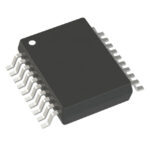 LTC1562AIG
The activity of extra discounts on wholesale prices is in full swing…
Please fill in your contact information and we will send you the latest wholesale price list.





