ChipApex | Global Electronic Components Supplier
SEARCH
Search Product
Search Post
— IC芯片 | 连接器 | 传感器 | 被动器件 —
Search productSearch post
— IC芯片 | 连接器 | 传感器 | 被动器件 —
Consult the customer manager about the wholesale price.
consultation hotline:86-132-6715-2157
email:[email protected]
Contact the product manager for consultation. One-stop consultation is available.
Do you want a lower wholesale price? Please send us your inquiry and we will reply immediately.
The LTC2387CUH-16#TRPBF is a 16-bit, 15Msps successive approximation register (SAR) analog-to-digital converter manufactured by Analog Devices Inc. It operates from 5V and 2.5V supplies with a differential input range of ±4.096V. Key electrical specifications include a typical SNR of 93.8dB at 1MHz input frequency, a maximum INL of ±0.8LSB, and power dissipation of 125mW at full throughput. The device features an internal reference buffer outputting 4.096V and utilizes a serial LVDS digital interface for data transmission. It is housed in a 32-lead 5mm × 5mm QFN package and supports an operating temperature range of 0°C to 70°C.
Verify the specific ordering suffix #TRPBF indicates tape and reel packaging when sourcing this component. Confirm that the 'C' grade designation aligns with the required commercial temperature range of 0°C to 70°C for the intended deployment environment. Cross-reference the manufacturer part number with authorized distribution channels to ensure authenticity and traceability.
Select the LTC2387CUH-16#TRPBF when a low-latency SAR ADC is required for control loops or imaging. Ensure the system design accommodates the 5V analog supply and 2.5V digital/logic supplies. Verify that the driving circuitry can settle within the acquisition time defined by the 15Msps clock rate. Consider the LVDS interface requirements for PCB layout and termination if utilizing the high-speed serial output mode.
This component belongs to the LTC2387 family of high-speed SAR ADCs, which also includes the 18-bit LTC2387-18 variant. The CUH-16#TRPBF specifically denotes the 16-bit resolution version in the commercial temperature grade, packaged in a QFN format. It is designed to complement development tools such as the DC2290A-B demonstration board for performance evaluation.
The LTC2387IUH-16#TRPBF serves as the industrial temperature grade equivalent (-40°C to 85°C). The LTC2387-18 offers higher 18-bit resolution but shares the same package and interface characteristics. Direct pin-compatible substitutes outside this family require verification of voltage levels, interface protocols, and timing parameters.
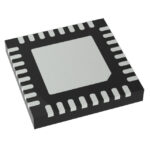 LTC2387CUH-16#TRPBF
The activity of extra discounts on wholesale prices is in full swing…
Please fill in your contact information and we will send you the latest wholesale price list.