 ChipApex | Global Electronic Components Supplier
SEARCH
Search Product
Search Post
— IC芯片 | 连接器 | 传感器 | 被动器件 —
Search productSearch post
— IC芯片 | 连接器 | 传感器 | 被动器件 —
Consult the customer manager about the wholesale price.
consultation hotline:86-132-6715-2157
email:[email protected]
Contact the product manager for consultation. One-stop consultation is available.
Do you want a lower wholesale price? Please send us your inquiry and we will reply immediately.
The LTC2389CUK-16#PBF is a 16-bit, 2.5Msps successive approximation register (SAR) analog-to-digital converter manufactured by Analog Devices Inc. It operates from a single 5V supply and features pin-configurable analog input ranges: ±4.096V fully differential, 0V to 4.096V pseudo-differential unipolar, and ±2.048V pseudo-differential bipolar. The device guarantees 16-bit resolution with no missing codes and achieves a maximum integral nonlinearity (INL) of ±1LSB. Key performance metrics include a typical signal-to-noise ratio (SNR) of 96.0dB in fully differential mode and -116dB total harmonic distortion (THD). It integrates a precision 4.096V reference with ±20ppm/°C temperature coefficient and dissipates 162.5mW at full speed.
Verify the specific suffix 'CUK' corresponds to the 48-lead 7mm × 7mm plastic QFN package with an operating temperature range of 0°C to 70°C. Confirm lead-free finish status as indicated by the '#PBF' designation. Ensure compatibility with the required OVDD supply voltage range of 1.71V to 5.25V for digital I/O levels.
Select this component when a single-supply 5V operation is required alongside flexible analog input configurations. The internal reference simplifies design by eliminating external precision references. Consider the 48-pin QFN package for space-constrained PCB layouts. Verify that the 16-bit resolution and 2.5Msps speed meet the system's dynamic range and throughput requirements.
This part belongs to the LTC2389-16 family of low-noise SAR ADCs. It shares architectural similarities with the 18-bit LTC2389-18 but offers 16-bit resolution. The 'CUK' suffix denotes the commercial temperature grade and QFN package variant, distinct from the LX (LQFP) package options available in the same series.
Direct pin-compatible replacements within the same package and temperature grade are not explicitly listed in the provided documentation. Cross-referencing with other 16-bit SAR ADCs requires verifying pinout compatibility, specifically regarding MODE0, MODE1, and OB/2C configuration pins.
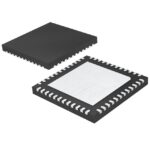 LTC2389CUK-16#PBF
The activity of extra discounts on wholesale prices is in full swing…
Please fill in your contact information and we will send you the latest wholesale price list.





