 ChipApex | Global Electronic Components Supplier
SEARCH
Search Product
Search Post
— IC芯片 | 连接器 | 传感器 | 被动器件 —
Search productSearch post
— IC芯片 | 连接器 | 传感器 | 被动器件 —
Consult the customer manager about the wholesale price.
consultation hotline:86-132-6715-2157
email:[email protected]
Contact the product manager for consultation. One-stop consultation is available.
Do you want a lower wholesale price? Please send us your inquiry and we will reply immediately.
The LTC2946MPMS#TRPBF is a single-channel, rail-to-rail system monitor manufactured by Analog Devices Inc. It measures current, voltage, power, charge, and energy via an I2C interface. The device operates within a common-mode voltage range of 2.7 V to 100 V and includes an internal shunt regulator for supplies exceeding 100 V. Key electrical specifications include a maximum supply voltage of 100 V, a minimum operating temperature of -55°C, and a maximum operating temperature of +125°C. It features a typical quiescent current of 900 µA, an input offset voltage of 77 µV, and a gain error of 0.5%. The component is housed in a 16-lead MSOP package and is supplied in tape and reel format.
Verify the specific suffix TRPBF indicates tape and reel packaging rather than tube. Confirm automotive qualification status if required for your application. Check for recent production change notices regarding bond wire or epoxy materials. Ensure compatibility with your I2C bus voltage levels. Validate that the MSOP-16 package fits your PCB footprint constraints.
Select this part when high-side current sensing up to 100 V is required alongside precise energy integration. The automotive grade variant suits applications demanding extended temperature performance. Consider the integrated shunt regulator if input transients exceed standard supply limits. Evaluate the 900 µA quiescent current against system power budgets. Verify I2C addressability if multiple monitors are used on the same bus.
This component belongs to the LTC2946 family of wide-range power, charge, and energy monitors. It shares core functionality with variants like the LTC2946HMS and LTC2946CMS but differs in grading and packaging. The MPMS designation typically denotes automotive-grade performance. The TRPBF suffix specifies the tape and reel delivery method suitable for automated assembly processes.
Direct substitutes include other LTC2946 family members such as LTC2946HMS#PBF or LTC2946IMS#PBF, noting differences in packaging and temperature grading. Cross-reference pinouts and register maps before substitution. Verify that alternative packages meet thermal and mechanical requirements.
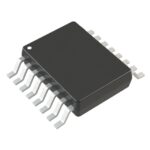 LTC2946MPMS#TRPBF
The activity of extra discounts on wholesale prices is in full swing…
Please fill in your contact information and we will send you the latest wholesale price list.





