 ChipApex | Global Electronic Components Supplier
SEARCH
Search Product
Search Post
— IC芯片 | 连接器 | 传感器 | 被动器件 —
Search productSearch post
— IC芯片 | 连接器 | 传感器 | 被动器件 —
Consult the customer manager about the wholesale price.
consultation hotline:86-132-6715-2157
email:[email protected]
Contact the product manager for consultation. One-stop consultation is available.
Do you want a lower wholesale price? Please send us your inquiry and we will reply immediately.
The LTC3256HMSE#PBF is a dual-output power management integrated circuit manufactured by Analog Devices Inc. It integrates a step-down charge pump and a low-dropout linear regulator (LDO) in a single package. The device operates with an input voltage range of 5.5V to 38V, making it suitable for automotive applications such as 12V battery systems. It provides two non-isolated outputs: one from the buck charge pump and one from the LDO. The component is designed for high diagnostic coverage in ISO 26262 systems and features an integrated watchdog timer.
Verify that the specific suffix #PBF indicates lead-free packaging compliant with RoHS directives. Confirm the HMSE grade corresponds to the required industrial or automotive temperature specifications for your design environment. Ensure the 16-MSOP-EP package footprint matches your PCB layout constraints. Cross-reference the manufacturer's latest datasheet to confirm current production status and any potential obsolescence notices before finalizing procurement plans.
Select this component when designing power supplies for automotive environments that require both efficient buck conversion and precise LDO regulation. It is appropriate for designs where space savings from integrating two regulators into one package are critical. Consider this part if the application mandates built-in diagnostic capabilities and watchdog functionality to meet stringent safety standards without adding external components.
This part belongs to the LTC3256 family of dual-output power management ICs. It is commonly evaluated using demonstration circuits like the DC2375A, which populates the board with automotive-grade components to test performance under realistic conditions. The device serves as a solution for reducing power dissipation compared to using separate ideal linear regulators in similar voltage conversion scenarios.
Direct substitutes include the LTC3256EMSE#PBF and LTC3256IMSE#PBF. These variants share the same functional architecture but differ in temperature grades and performance specifications. Verify electrical characteristics against your specific thermal and operational requirements before substituting.
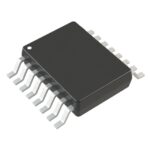 LTC3256HMSE#PBF
The activity of extra discounts on wholesale prices is in full swing…
Please fill in your contact information and we will send you the latest wholesale price list.





