 ChipApex | Global Electronic Components Supplier
SEARCH
Search Product
Search Post
— IC芯片 | 连接器 | 传感器 | 被动器件 —
Search productSearch post
— IC芯片 | 连接器 | 传感器 | 被动器件 —
Consult the customer manager about the wholesale price.
consultation hotline:86-132-6715-2157
email:[email protected]
Contact the product manager for consultation. One-stop consultation is available.
Do you want a lower wholesale price? Please send us your inquiry and we will reply immediately.
The LTC3541EDD-3#PBF is a high-efficiency synchronous buck converter integrated with a low-dropout (LDO) regulator, manufactured by Analog Devices Inc. It operates within an input voltage range of 2.7 V to 5.5 V and delivers up to 500 mA from the buck output. The device features two fixed outputs: 1.575 V and 1.8 V. It functions at a switching frequency of 2.25 MHz with a typical quiescent current of 285 uA. The component is housed in a DFN-10 package and supports operation temperatures from -40°C to +85°C.
Verify availability status as supply may be limited or subject to factory special orders. Confirm that the DFN-10 package footprint matches your PCB design requirements. Ensure input voltage does not exceed the maximum rating of 5.5 V during operation. Check RoHS compliance documentation for environmental regulations. Validate thermal performance under maximum load conditions.
Select this component when a compact solution is needed for generating two specific fixed voltages from a single lithium-ion or similar battery source. The fixed 1.575 V and 1.8 V outputs eliminate the need for external feedback resistors. Consider the 285 uA quiescent current impact on standby power consumption. Verify that the 500 mA buck output current meets the peak load requirements of the downstream circuitry.
This part belongs to the LTC3541 series of mixed-signal power management ICs designed for space-constrained applications. It combines a synchronous buck topology with a linear regulator to provide clean power rails. The DFN-10 package offers a small thermal pad for improved heat dissipation compared to smaller packages. It is distinct from adjustable variants which require external resistor networks for voltage setting.
Check for direct substitutes within the LTC3541 family that offer different fixed output voltages if the 1.575 V/1.8 V combination is unsuitable. Verify pin compatibility before swapping with other Analog Devices dual-output regulators. Ensure replacement parts support the same 2.25 MHz switching frequency to maintain existing filter designs.
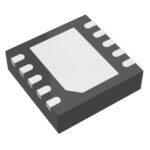 LTC3541EDD-3#PBF
The activity of extra discounts on wholesale prices is in full swing…
Please fill in your contact information and we will send you the latest wholesale price list.





