 ChipApex | Global Electronic Components Supplier
SEARCH
Search Product
Search Post
— IC芯片 | 连接器 | 传感器 | 被动器件 —
Search productSearch post
— IC芯片 | 连接器 | 传感器 | 被动器件 —
Consult the customer manager about the wholesale price.
consultation hotline:86-132-6715-2157
email:[email protected]
Contact the product manager for consultation. One-stop consultation is available.
Do you want a lower wholesale price? Please send us your inquiry and we will reply immediately.
The LTC3672BEDC-1#TRPBF is a synchronous step-down switching regulator manufactured by Analog Devices Inc. It integrates three buck converters and one low-dropout linear regulator (LDO) within an 8-lead WDFN package with an exposed pad. The device operates from an input voltage range of 2.7V to 5.5V, delivering up to 400mA for the primary buck channel and 150mA for auxiliary channels. It features a fixed switching frequency of 2.7MHz, enabling the use of small external components. The controller supports power good indication and shutdown modes, operating reliably across a junction temperature range of -40°C to +125°C.
Verify the specific suffix and tape-and-reel packaging details against the official datasheet before ordering. Confirm that the 8-WDFN exposed pad thermal requirements are met by the target PCB layout. Ensure the input voltage supply remains within the specified 2.7V to 5.5V range during operation to maintain regulatory performance and device integrity.
Select this component when a single IC solution is required to generate multiple regulated voltages from a single input source. It is suitable for designs where board area is limited and high switching frequencies are preferred to reduce inductor size. Consider the thermal dissipation characteristics of the WDFN package relative to the total load current and ambient conditions.
This part belongs to the LTC3672 family of power management integrated circuits designed for space-constrained applications. It consolidates multiple power stages into a single package, reducing the bill of materials and assembly complexity compared to discrete solutions. The series is targeted at portable electronics and embedded computing platforms requiring efficient, multi-rail power distribution.
Check for direct pin-compatible alternatives within the Analog Devices portfolio that offer similar output configurations. Verify that any substitute maintains the same input voltage range and switching frequency characteristics to ensure compatibility with existing passive components and thermal designs.
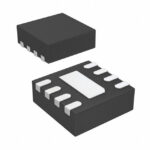 LTC3672BEDC-1#TRPBF
The activity of extra discounts on wholesale prices is in full swing…
Please fill in your contact information and we will send you the latest wholesale price list.





