ChipApex | Global Electronic Components Supplier
SEARCH
Search Product
Search Post
— IC芯片 | 连接器 | 传感器 | 被动器件 —
Search productSearch post
— IC芯片 | 连接器 | 传感器 | 被动器件 —
Consult the customer manager about the wholesale price.
consultation hotline:86-132-6715-2157
email:[email protected]
Contact the product manager for consultation. One-stop consultation is available.
Do you want a lower wholesale price? Please send us your inquiry and we will reply immediately.
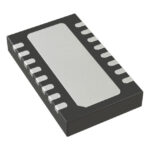
The LTC4267CDHC-3#TRPBF is a Powered Device (PD) interface controller compliant with the IEEE 802.3af standard, designed for Power over Ethernet applications. It integrates a 300kHz current-mode switching regulator to provide a complete power solution. The device operates within a supply voltage range of -57V to -37V and supports Class 0 through Class 3 PD classifications. It features an integrated power switch with a maximum on-resistance of 2 ohms and includes comprehensive protection mechanisms such as reverse input protection, thermal shutdown, and output short-circuit protection.
Verify the specific suffix #TRPBF indicates tape-and-reel packaging when sourcing components. Confirm that the CDHC package designation corresponds to the required 16-pin DFN footprint for your PCB layout. Ensure compatibility with the -40°C to +85°C industrial temperature range specified for this grade. Cross-reference the manufacturer's latest documentation to confirm pinout integrity and electrical specifications before finalizing procurement orders.
Select this component when designing systems requiring strict adherence to IEEE 802.3af standards with integrated regulation. It is suitable for applications needing a compact solution that combines classification detection with DC-DC conversion. Consider the 16-pin DFN EP package for space-constrained designs. Evaluate the 300kHz switching frequency against electromagnetic interference requirements and inductor size constraints relative to alternative higher-frequency controllers.
This part belongs to the LTC4267 family of PoE controllers from Analog Devices. It is specifically engineered to simplify the design of Powered Devices by combining classification, power path management, and switching regulation into a single IC. The device eliminates the need for external discrete components typically required for PD interface logic and basic power conditioning, streamlining the bill of materials for network infrastructure equipment.
The LTC4267CGN-1#PBF serves as a pin-compatible alternative in an SSOP-16 package. Verify that the package dimension changes do not impact the existing PCB footprint or mechanical constraints. Ensure that the operating temperature range and electrical parameters of the substitute part meet the original design specifications.
 LTC4267CDHC-3#TRPBF
The activity of extra discounts on wholesale prices is in full swing…
Please fill in your contact information and we will send you the latest wholesale price list.