 ChipApex | Global Electronic Components Supplier
SEARCH
Search Product
Search Post
— IC芯片 | 连接器 | 传感器 | 被动器件 —
Search productSearch post
— IC芯片 | 连接器 | 传感器 | 被动器件 —
Consult the customer manager about the wholesale price.
consultation hotline:86-132-6715-2157
email:[email protected]
Contact the product manager for consultation. One-stop consultation is available.
Do you want a lower wholesale price? Please send us your inquiry and we will reply immediately.
The LTC4296AUK-1#PBF is a five-port Single Pair Ethernet (SPoE) Powered Device Equipment (PD) controller compliant with the IEEE 802.3cg standard. Designed for operation in 24V and 54V systems, it manages power delivery over single-pair cabling to simplify installation. The device integrates high-side circuit breakers with foldback and analog current limiting for surge and short-circuit protection. It supports Serial Communication Classification Protocol (SCCP) for precise device classification and maintains minimum voltage features to ensure cable safety. The controller utilizes an SPI bus interface with Packet Error Code (PEC) protection for telemetry and control.
Verify the specific suffix against official Analog Devices documentation to confirm package type and temperature range. Ensure compatibility with existing 10BASE-T1L PHY components such as ADI N1100 or ADIN2111. Confirm that the design supports the required input voltage rails of 24V or 54V. Validate that the PCB layout accommodates the specified QFN footprint dimensions.
Select this component for designs requiring multi-port SPoE integration without external discrete switching complexity. It is suitable for environments demanding strict compliance with IEEE 802.3cg protocols. Consider the low quiescent current requirements if battery-backed or energy-harvesting power sources are utilized. Ensure the system architecture supports the necessary SPI communication lines for configuration and monitoring.
This part belongs to the LTC4296 family of SPoE controllers from Analog Devices. It is engineered specifically for the 10BASE-T1L physical layer standard, enabling data and power transmission over a single twisted pair. The device complements Analog Devices' broader portfolio of Ethernet transceivers and switches, facilitating complete end-to-end SPoE solutions for industrial and IoT deployments.
The LTC4296AUK-1#PBF serves as the commercial grade variant of the LTC4296. Verify if the industrial grade version is required for extended temperature ranges. No direct pin-compatible substitutes are documented in public sources; redesign may be necessary for alternative controllers.
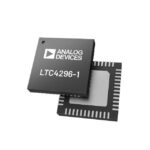 LTC4296AUK-1#PBF
The activity of extra discounts on wholesale prices is in full swing…
Please fill in your contact information and we will send you the latest wholesale price list.






