 ChipApex | Global Electronic Components Supplier
SEARCH
Search Product
Search Post
— IC芯片 | 连接器 | 传感器 | 被动器件 —
Search productSearch post
— IC芯片 | 连接器 | 传感器 | 被动器件 —
Consult the customer manager about the wholesale price.
consultation hotline:86-132-6715-2157
email:[email protected]
Contact the product manager for consultation. One-stop consultation is available.
Do you want a lower wholesale price? Please send us your inquiry and we will reply immediately.
The LTC4300A-1CMS8#PBF is a hot swappable 2-wire bus buffer designed for I/O card insertion into live backplanes without data corruption. It provides bidirectional buffering between SDA and SCL lines, isolating backplane and card capacitances. The device features rise-time accelerator circuitry to maintain signal integrity with weaker pull-ups and precharges lines to 1V during insertion. Operating on a single supply voltage (VCC) ranging from 2.7V to 5.5V, it includes an ENABLE pin for low current shutdown (<1μA) and an open-drain READY output indicating connection status. It supports I2C, Fast Mode, and SMBus standards up to 400kHz in an 8-lead MSOP package.
Verify the specific suffix CMS8 corresponds to the commercial temperature range and plastic MSOP package. Confirm lead-free finish compliance with RoHS directives before finalizing procurement orders. Ensure the ordering part number matches the required tape or tube packaging format for your assembly line.
Select this component when a single-supply interface is required between backplane and card sides. Use the ENABLE pin for system-level power management control. Verify that the system pull-up resistors meet the slew rate requirements to activate the boost currents properly during signal transitions.
This part belongs to the LTC4300A series of 2-wire bus buffers. The -1 variant utilizes an ENABLE pin for control, whereas the -2 variant uses a separate VCC2 supply for level shifting. Both share similar hot swap and buffering capabilities but differ in pin configuration and multi-voltage support options.
LTC4300A-1IMS8#PBF offers the same functionality with an extended industrial temperature range (-40°C to 85°C).
It precharges SDA and SCL lines to 1V and keeps backplane and card capacitances isolated until the start-up sequence completes.
The READY pin is an open-drain output that goes high when the ENABLE pin is high and the start-up sequence is complete, indicating the busses are connected.
Yes, two LTC4300A-1 devices can be connected back-to-back to extend the distance between two 2-wire systems.
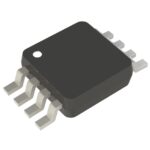 LTC4300A-1CMS8#PBF
The activity of extra discounts on wholesale prices is in full swing…
Please fill in your contact information and we will send you the latest wholesale price list.





