 ChipApex | Global Electronic Components Supplier

SEARCH
Search Product
Search Post
— IC芯片 | 连接器 | 传感器 | 被动器件 —
Search productSearch post
— IC芯片 | 连接器 | 传感器 | 被动器件 —
Consult the customer manager about the wholesale price.
consultation hotline:86-132-6715-2157
email:[email protected]
Contact the product manager for consultation. One-stop consultation is available.
Do you want a lower wholesale price? Please send us your inquiry and we will reply immediately.
LTC4301LCDD#TRPBF is listed in the Signal Buffers, Repeaters, Splitters range at ChipApex. The manufacturer field lists Analog Devices Inc.. Its product description is IC REDRIVER I2C HOTSWAP 2CH 8DFN. Review the specifications below when checking this part for your BOM.
The Analog Devices LTC4301LCDD#TRPBF is a hot swappable, supply-independent 2-wire bus buffer designed for I2C and SMBus applications. It operates with a VCC range of 2.7V to 5.5V and supports frequencies up to 600kHz. The device translates low voltage signals (down to 1V) to standard logic rails while isolating input and output capacitances. It features 10kV HBM ESD protection and includes precharge circuitry to prevent bus corruption during live insertion. The component is housed in an 8-lead DFN package measuring 3mm x 3mm.
Verify the specific suffix #TRPBF indicates tape and reel packaging when sourcing this component. Confirm the LC designation corresponds to the commercial temperature range of 0°C to 70°C. Ensure compatibility with the required 8-lead DFN footprint during procurement planning.
Select this part when supply independence is required to bridge different voltage domains on SDA and SCL lines. It is suitable for systems needing high ESD protection and capacitance isolation. Verify that the operating environment remains within the specified commercial temperature limits for the LC variant.
This component belongs to the LTC4301L family of hot swappable bus buffers. It shares functional similarities with the LTC4300A but offers supply-independent operation. The DFN package provides a compact solution for space-constrained designs requiring robust bus protection.
Public confirmed substitute part numbers are not available in the provided documentation. Evaluate the LTC4300A or LTC4302 series only if their specific addressable or non-supply-independent features align with system requirements.
It uses precharge circuitry to force 1V onto output pins and waits for a stop bit or bus idle before connecting the input and output sides, preventing bus corruption.
Driving CS above 1.4V disconnects the input from the output and pulls READY low. Driving it low allows connection after a transaction completes.
Yes, the bidirectional buffering ensures that clock stretching, arbitration, and synchronization protocols function correctly across the buffer.
Explore related parts through Interface, Integrated Circuits (ICs), all product categories, ChipApex homepage.
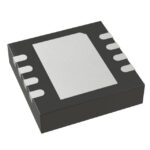 LTC4301LCDD#TRPBF

The activity of extra discounts on wholesale prices is in full swing…
Please fill in your contact information and we will send you the latest wholesale price list.





